Comparing research platforms
Maze vs. Great Question: Features, Pricing, and Use Cases Comparison
Compare Maze and Great Question to see which platform better fits your team’s research needs, AI workflows, participant management, and budget.


TL;DR
Both Maze and Great Question use AI to run and analyze interviews.
Great Question focuses AI moderation on customer interviews. Its AI asks questions, follows up on user answers, and summarizes the key takeaways.
Maze applies AI across more research workflows. The AI moderator runs async interviews with dynamic follow-ups, but the same AI capabilities also support prototype tests, surveys, and live website testing—with automated themes, sentiment analysis, and reports built in.
Maze vs. Great Question: Introduction
Both Maze and Great Question are end-to-end, multi-method user research platforms.
Great Question supports moderated and unmoderated research methods, including interviews, surveys, prototype testing, card sorting, and tree testing. Its AI tools can transcribe sessions, generate summaries, identify themes, and let teams query previous research through Ask AI. AI-moderated interviews, which are currently in beta, adapt questions and probe participants’ responses at scale.
Maze is an AI-first, end-to-end research platform built for modern product teams. It brings qualitative and quantitative research into one workflow. Teams can run prototype testing, live website testing, card sorting, tree testing, surveys, and in-product prompts. The platform offers panel participant recruitment, automated reporting, and a mobile app for cross-device testing. Maze AI supports the research lifecycle by helping teams plan studies and run interviews asynchronously through Maze’s AI moderator and turn raw data into structured findings with summaries, themes, and tagged insights. Integrations with Figma and AI prototyping tools like Figma Make, Bolt, and Lovable make it a complete, scalable solution for modern research workflows.
In this detailed comparison, we’re covering how both these platforms compare to each other in key points such as:
- AI research approach: How does this platform use AI across the research workflow—from planning studies to running them and analyzing results?
- Research breadth: Which research methods does each platform support today, and can it cover your main moderated and unmoderated testing use cases in one place?
- Integrations: How well does each tool plug into your current stack—UX design, product analytics, and collaboration tools?
- Pricing: What does it cost to get started and to scale with more teammates, studies, and AI features?
Maze vs. Great Question: Comparison
Maze | Great Question | |
|---|---|---|
Overall rating (G2) | 4.5/5 based on 100+ reviews | 4.7/5 based on 22 reviews |
Ease of setup | 9.4 / 10 | 8.9 / 10 |
Ease of use | 9.0 / 10 | 8.8 / 10 |
Integrations |
|
|
Pricing |
|
|
Best for… | Best for continually informing product and business decisions with insights uncovered with comprehensive user research methods | Best for managing the operational lifecycle of customer research, from participant panel recruitment to conversational data synthesis |
Maze vs. Great Question: Main differences
What really sets Maze and Great Question apart for teams doing research?


AI moderation

Great Question’s AI-moderated interview solution is currently in beta. The feature is designed for high-volume research, with adaptive probing, transcripts, highlights, and insights that connect to its research repository.
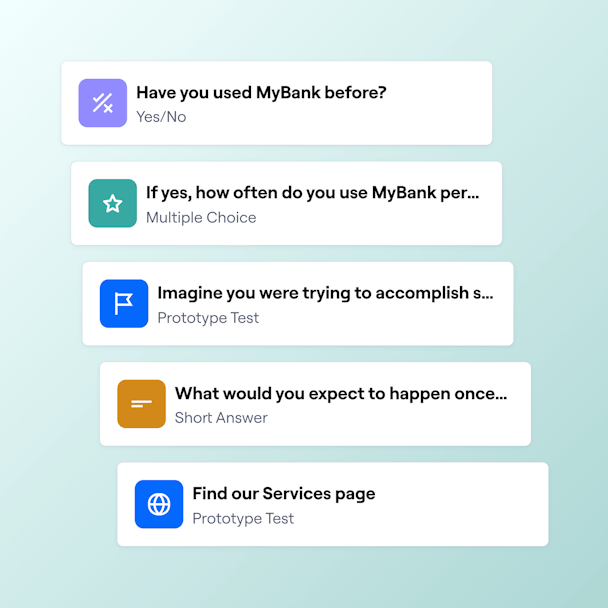
Maze centralizes every research method, team and learning in one place, so insight keeps pace with the decisions that depend on it. Mix qual and quant in the same study to dive deeper while saving time..


Breadth of research methods
Alongside incoming AI moderator capabilities, Great Question also supports live moderated interview studies with panel management, a scheduling calendar, and automated participant incentives. It also offers unmoderated methods like surveys, prototype tests, card sorting, and tree testing.
Maze is a complete user research and testing tool for both moderated and unmoderated studies—including both AI-moderated and traditional interview studies, feedback surveys, live website testing, prototype testing, card sorting, and tree testing. It also supports usability testing for AI-generated prototypes created in Lovable, Bolt, and Figma Make, giving teams a faster way to validate early concepts.

Integration with design and prototyping workflows
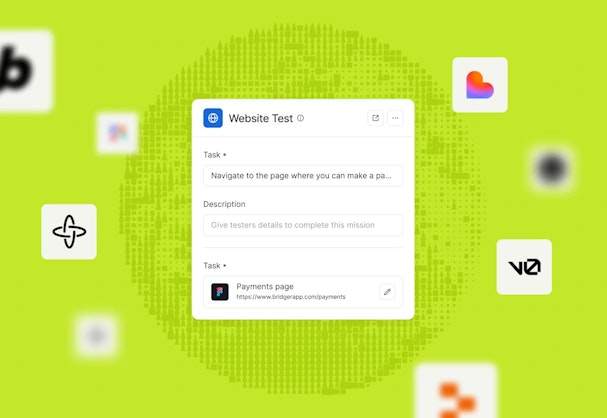
While Great Question’s prototyping workflow is limited to Figma, Maze supports a broader design and prototyping stack, including Figma, FigJam, Figma Make, Bolt, Lovable, and Replit.
This helps product teams move fast across early concepts, wireframes, polished prototypes, and AI-generated designs.
Maze vs. Great Question: Feature comparison
Features


Maze
—
Google/Outlook Calendar, Exchange, Office 365, iCloud
Google/Outlook Calendar, Exchange, Office 365, iCloud
—
—
Axure, Figma
Figma only
Axure, Figma
Bolt, Figma Make, Lovable, Replit
—
Bolt, Figma Make, Lovable, Replit
Atlassian, FigJam, Miro, Notion, Slack
Slack, Google Workspace, Calendar, Microsoft, Salesforce
Atlassian, FigJam, Miro, Notion, Slack
Google Meet, Microsoft Teams, Zoom
Zoom
Google Meet, Microsoft Teams, Zoom
Maze vs. Great Question: AI capabilities
Features
Maze
—
—
—
—
—
—
—
—
—
—
![]()
Maze reduced the time and cost of running usability tests while allowing us to 10x our sample sizes. This efficiency and scale gives us much greater confidence in the precision of our metrics, all while keeping projects fast and more cost-effective.
Renato Leite
Head of CX Research Operations at Itau



Why Product and Design teams choose Maze over Great Question

End-to-end research, ready out of the box
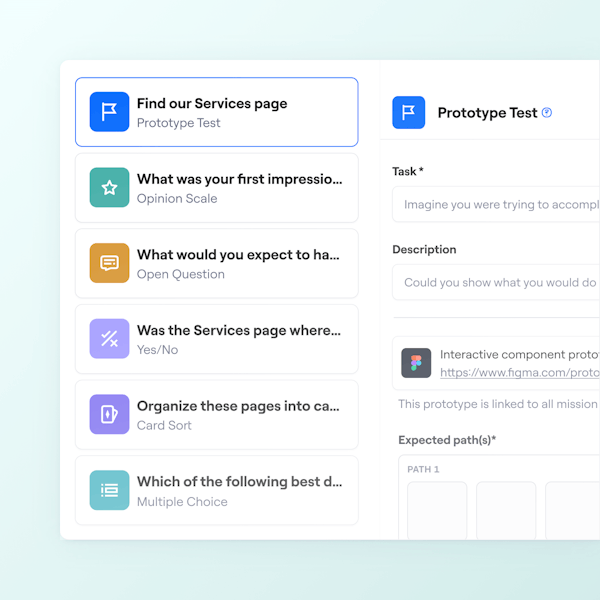
Recruit participants with ease and run card sorting, tree testing, prototype testing, surveys, A/B testing, mobile testing, and interviews (AI-moderated and researcher-led) in one platform. Maze supports continuous research from day one, helping teams move from question to insight without switching tools.

Seamless participant recruitment
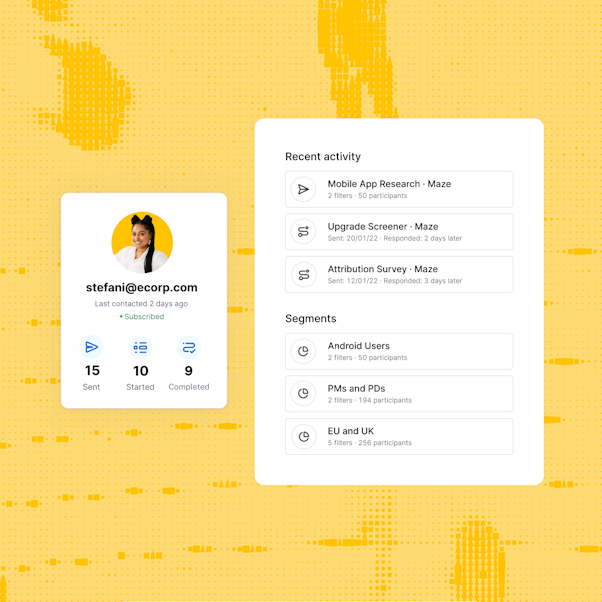
With Maze panel, you can recruit from millions of global testers using 400+ filters. You can also invite users with shareable study links and targeted in-product prompts across live websites.

AI-powered analysis and automated reporting
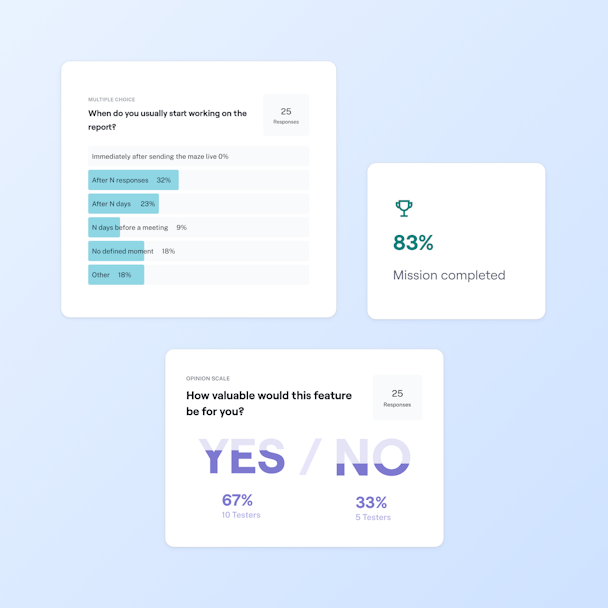
Maze AI highlights insights in your qualitative studies, like research summaries, key themes, and user sentiment. These insights are combined with findings from quantitative studies in automatically generated research reports—ideal for democratizing research and engaging stakeholders.
Maze vs. Great Question: Takeaways
Choosing between Maze and Great Question depends on how your team runs research and how much support you need around research operations.
Great Question offers surveys, interviews, prototype testing, card sorting, and tree testing. Its AI moderator (currently in beta) is built for adaptive, high-volume interviews, with follow-up probing, transcripts, highlights, and repository-connected insights to make research searchable.
Maze is an AI‑first, end‑to‑end user research and testing platform for both moderated and unmoderated studies. Teams can recruit participants and run research studies—including AI-moderated and researcher-led interviews, prototype tests, live website tests, live mobile tests, card sorting, tree testing, feedback surveys, first-click tests, and in-product prompts—in one workflow. Maze AI supports the research process throughout, from building studies and moderating interviews to summarizing findings and generating themes. Automated reports combine qualitative feedback with behavioral data like success rates, heatmaps, misclicks, usability scores, and path analysis, helping teams move from research findings to product decisions faster.



Maze vs. Great Question FAQs
Why choose Maze over Great Question for user research?
Why choose Maze over Great Question for user research?
When comparing Great Question vs. Maze, Maze is built for product teams that need fast, iterative research across more of the product lifecycle. Teams can run more research methods with Maze, including AI-moderated interviews, prototype tests, card sorting, tree testing, live website tests, live mobile tests, and feedback surveys in one workflow.
Maze also gives teams more control over AI-moderated interviews than Great Question, including structured and freeform goals, dynamic follow-up questions, probing controls, and research-quality checks. Plus, Maze connects with product and design workflows through integrations like Figma, FigJam, Figma Make, Bolt, Lovable, Replit, Miro, Notion, Slack, Zoom, Teams, and Google Meet.
While Great Question also supports multiple methods, it focuses more on interview operations, participant panels, and a central research repository. It also has participant management, scheduling, repository workflows, and AI-assisted synthesis. But it lacks A/B-style testing and live product experiments, so Maze is often the better choice when continuous, high-volume product testing is the primary goal.
How can I start using Maze?
How can I start using Maze?
You can get started with Maze by signing up for a free account—no credit card needed. It’s a quick way to explore the platform and run your first study. If you’re looking for a tailored walkthrough or want to see how Maze fits into your team’s workflow, you can also book a demo with our team.
Can I switch from Great Question to Maze?
Can I switch from Great Question to Maze?
Yes! Maze supports both moderated and unmoderated research in a single platform, so you can consolidate your tools and your workflow. Our team can help you migrate studies, set up templates, and make the most of Maze’s built-in participant management and AI-powered reporting. If you’d like hands-on support, we’re happy to walk you through it.
Who is Maze for?
Who is Maze for?
Maze is built for product teams, UX researchers, designers, and anyone involved in making user-informed decisions. Whether you're part of a startup running lean tests or an enterprise scaling research across departments, Maze gives you the tools to collect insights quickly, collaborate easily, and deliver better experiences.
What kind of teams use Maze?
What kind of teams use Maze?
Maze is used by product, design, research, and marketing teams at companies of all sizes—from early-stage startups to global enterprises. It’s especially valuable for teams practicing continuous discovery, looking to scale research, or aiming to democratize insights across functions. Whether you're validating prototypes, testing live flows, or running interviews, Maze supports cross-functional teams working to build better products.
Which platform allows for a wider variety of user research methods?
Which platform allows for a wider variety of user research methods?
Maze allows teams to run many user research methods in one platform, including AI-moderated interviews, moderated interviews, prototype tests, live website tests, mobile tests, card sorting, tree testing, feedback surveys, first-click tests, and in-product prompts. This makes it easier to choose the right method for each research question, from early discovery to live product validation.
How do Maze and Great Question compare in AI functionalities?
How do Maze and Great Question compare in AI functionalities?
Maze offers a wider set of AI functionalities than Great Question. Both support AI-moderated interviews, transcription, analysis, and summaries, but Maze adds project naming, question quality checks, phrasing support, survey theme grouping, and sentiment analysis. Great Question’s AI is centered mainly on interviews, while Maze applies AI across the entire research workflow.