

Maze vs. UserTesting: Introduction
When it comes to research with your users, choosing the right platform can make all the difference. Maze and UserTesting are two popular platforms in the market, but which is the better choice for your organization?
UserTesting is a human insight platform helping teams watch and listen to real people as they react to ideas, designs, and live experiences. The platform combines a participant network, testing for both moderated and unmoderated studies, and AI tools that summarize themes and sentiments from video, text, and behavioral data.
Maze is an AI-first end-to-end platform that enables teams to collect both qualitative and quantitative data with website testing, prototype testing, interview studies, surveys, card sorting, and more. From participant recruitment to research reporting, Maze helps teams get the insights they need to drive product and business decisions. Maze AI streamlines user research by supporting research organization, execution, and reporting—whether it’s writing the perfect question, conducting AI-moderated interviews, or summarizing findings in a flash.
In this detailed comparison, we’re covering how both these platforms compare to each other in key points such as:
- User-friendliness: How easy will this platform be to onboard with my team or organization? Will this help scale our user research?
- Versatility: Is this a true end-to-end platform? Does it facilitate both quantitative and qualitative research methods? How well does this platform integrate with the design tools we use?
- Product decision making: How easily and quickly can we conduct research at scale, analyze results, and customize insight reports to make important decisions?
Platform comparison (from G2 reviews)
Maze | UserTesting | |
|---|---|---|
Overall rating (G2) | 4.5 / 5 out of 90+ reviews | 4.5 / 5 out of 600+ reviews |
Ease of use | 8.9 / 10 | 8.4 / 10 |
Ease of setup | 9.4 / 10 | 8.6 / 10 |
Product direction | 8.4 / 10 | 8.1 / 10 |
Pricing |
|
|


Type of platform

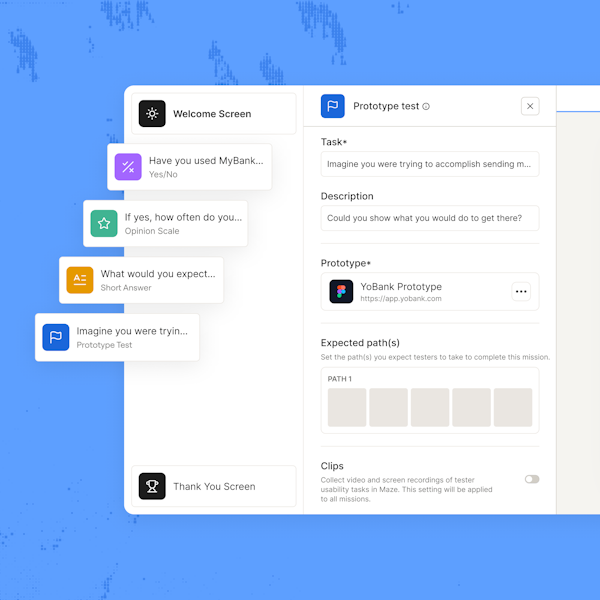
UserTesting is a human insight platform focused on moderated and unmoderated video-based research. It also supports written tasks, multiple-choice questions, surveys, and information architecture tests, like tree testing.
Maze is a complete user research and testing tool for both moderated and unmoderated studies—including interview studies, surveys, live website testing, prototype testing, card sorting, and tree testing. It also supports usability testing for AI-generated prototypes created in Loveable, Bolt, and Figma Make, giving teams a faster way to validate early concepts.

Time to insight
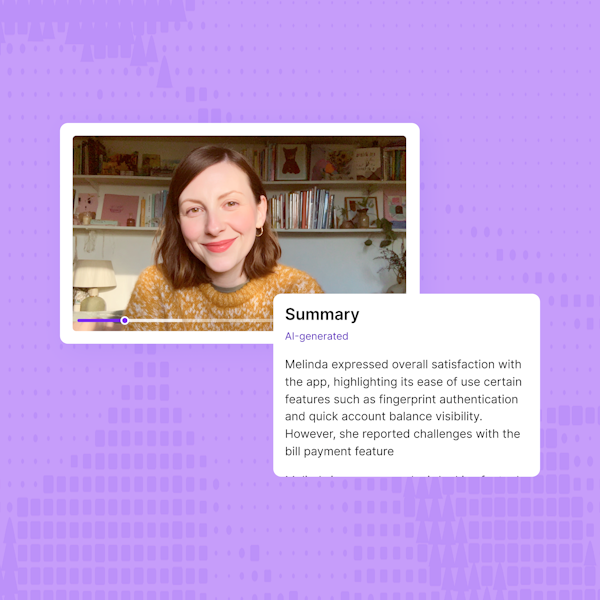
UserTesting offers AI insight summaries that analyze verbal responses and on-screen behavior for specific task types, such as navigation tasks, action-based tasks, and verbal prompts within unmoderated studies of up to 25 contributors. These summaries help reduce analysis time, but they apply only to certain task formats
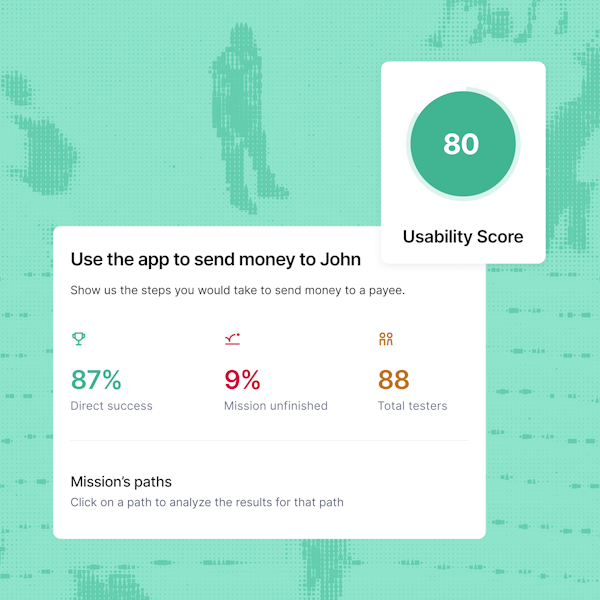
Maze’s auto-generated reports are available following all Maze research studies. Reports include a mix of quantitative and qualitative insights, depending on the study—including AI-powered summaries where applicable. These quick insights allow you to share user research findings with ease and make more confident product decisions.

Research democratization
UserTesting supports democratization with templates, roles, and AI summaries that let more teammates view or contribute to research. But only licensed creator seats can launch studies, so scaling research still depends on how many paid seats a team has. And without training and permissions set correctly, non-researchers may introduce bias or run low-quality studies.
Maze is an enterprise-ready, user-friendly platform that empowers every designer, product person, and researcher company-wide to make product decisions based on user insights.
Maze vs. UserTesting: Feature comparison
Features

UserTesting
Maze
Bolt, Figma Make, Lovable, Replit
Bolt, Figma Make, Lovable, Replit
-
-
-
Google Meet, Microsoft Teams, Zoom
Google Meet, Microsoft Teams, Zoom
Maze vs. UserTesting: AI Capabilities
Features
UserTesting
Maze
-
-
-
-
-
-
-
Maze vs. UserTesting: Participant management & recruiting
Features
UserTesting
Maze
400+ targeting attributes
Unknown number of attributes
400+ targeting attributes
150+ countries
30 countries
150+ countries
-
![]()
Our team transitioned away from UserTesting to Maze at the start of the year, and it's been an invaluable tool for making us more customer-centric in a fast, actionable way. We've reduced the time it takes to run a study from an average of 12 weeks down to just 1 week.
Heidi Brown
Director of Product Design and User Research at Classy



UserTesting: Deep feedback at a cost
UserTesting lets teams watch real people use their products through moderated interviews, unmoderated tasks, and mobile tests. It focuses on capturing detailed qualitative insight with screen, audio, and context recordings.



Run moderated and unmoderated studies that show how people move through an experience, speak their thoughts, and interact on their devices, captured through screen, audio, and optional camera inputs.

Complex pricing structure doesn't allow teams to scale research. It becomes expensive to add extra seats, run studies of different types/blocks, or enroll in extra support services.


The contributor network spans 30 countries. The platform also uses LinkedIn verification and AI checks to keep participant quality reliable.


Integrate with project management tools like Slack, Trello, Microsoft Teams, and Google Calendar.
Maze: The end-to-end research platform
Maze is intuitive enough for designers and product managers to use, while still having the methodological rigor that researchers need. Easier to setup (9.5 vs 8.6 rating on G2) and with the power to gather valuable feedback all in one place, Maze transforms insights from confusing to competitive edge.
Gather both quantitative and qualitative feedback through methods like moderated studies, card sorting and heatmaps, leveraging both numerical and behavioral usability data.
Create team spaces, assign roles, and work together on mazes from the outset, with projects ranging from user surveys to usability tests.
Reach out to 6M+ participants from a Panel powered by Prolific and Respondent, to your own participant database with Reach, and specific Amplitude cohorts with in-product prompts, and choose the recruitment options that fit your needs.
Integrate with design and AI-prototyping tools like Figma, Axure, Figma Make, Bolt, and Loveable, and connect research to everyday workflows through Slack, Jira, Notion, Zoom, Google Meet, and calendar apps for seamless user interviews.
Maze vs. UserTesting: Takeaways
At the end of the day, it comes down to which platform aligns better with your workflow and vision as a team.
UserTesting is designed for teams that prioritize live moderated interviews and video-based human insight. It offers participant recruitment, support for unmoderated tasks, and AI features, including insight summaries, survey themes, sentiment analysis, and friction detection. Its core workflows, however, still rely heavily on scheduled sessions and video review, so studies often take longer to run. UserTesting’s licensing model also requires paid Creator seats, which can make broad, organization-wide research expensive to scale without careful seat planning
On the other hand, Maze is built for teams that need fast, self-serve, multi-method research at scale. It supports moderated and unmoderated studies in one platform, with the Maze AI suite automating and supporting key research processes with research-grade AI. Maze AI Moderator enables you to seamlessly scale user interviews with smart features and insights you can trace and trust. Overall, Maze gives research and product teams a faster, scalable way to generate strategically relevant user insights throughout the product development cycle, making research a strategic center of influence in your organization.
Why do product and design teams choose Maze over UserTesting?


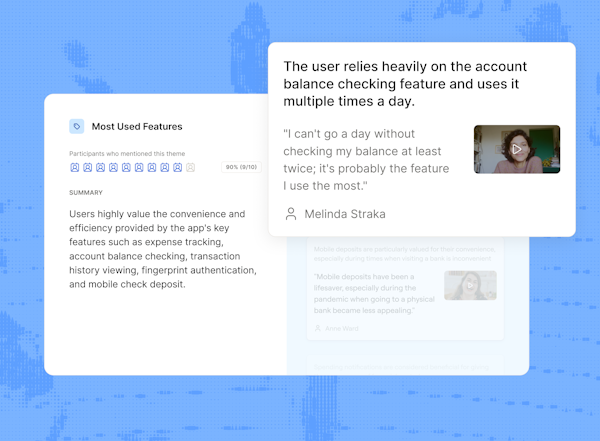
All-in-one holistic platform
Get the full picture faster with a breadth of native, AI-powered quantitative and qualitative research methods that anyone in your team can quickly conduct. From testing prototypes to defining information architecture, Maze enables user and product research across the product development process.

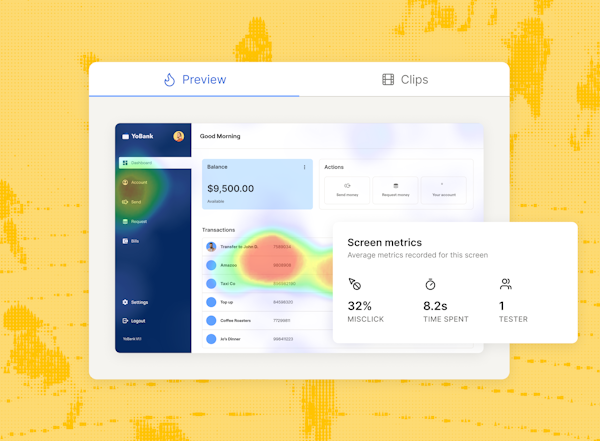
Intuitive & user-friendly
Maze keeps your research workflow straightforward with unlimited seats and AI-guided experiences that enable anyone to conduct rigorous research. The interface is clear, each study type follows the same step-by-step structure, and tests work on any device. This consistency minimizes the learning curve and makes it easier for more people across your team to conduct expert-level research. It’s ready to use from day one, not one day.

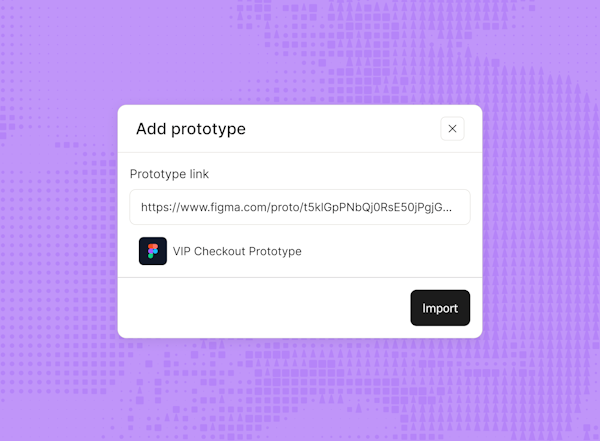
Robust, customizable reporting
Maze automatically generates visual reports for every study, with themes, summaries, and key findings powered by Maze AI. You can filter, sort, and customize reports to discover the patterns that matter and share valuable insights with stakeholders.



![]()
Maze allows us to consolidate our research in one place and make it visible for everyone. I’m optimistic that Maze will help keep things more centralized and help us work better together as a team.
Janet Taylor
Senior Director of Product Design and Research at Homebase



Frequently asked questions
Why choose Maze over UserTesting for user research?
Why choose Maze over UserTesting for user research?
Product managers, designers, and researchers pick Maze because it’s easier to adopt, quicker to set up, and intuitive for cross-functional use.
Maze brings moderated interview studies, unmoderated tests, prototype testing, mobile usability testing, card sorting, tree testing, and surveys into one place, making it a true end-to-end research hub. Maze Panel simplifies participant recruitment, and Maze Reach enables teams to manage the participants they recruit with ease.
Automated reports are delivered within minutes of study completion, not hours—drastically reducing time to insight. Reports include both quantitative and qualitative insights depending on the study, as well as AI-powered summaries where applicable.
When compared to UserTesting, Maze offers a more intuitive experience, stronger AI capabilities, and reporting that facilitates cross-team collaboration and decision-making.
Can Maze do moderated interviews?
Can Maze do moderated interviews?
Yes. Interview Studies allow you to schedule, run, and analyze user interviews seamlessly with Maze.
Can I request a demo?
Can I request a demo?
Absolutely! Tell us a little about your company here and we’ll connect you with someone in our team.
Who is Maze for?
Who is Maze for?
Maze is built for product teams, UX researchers, designers, and anyone involved in making user-informed decisions. Whether you're part of a startup running lean tests or an enterprise scaling research across departments, Maze gives you the tools to collect insights quickly, collaborate easily, and deliver better experiences.
How do Maze and UserTesting compare in AI functionalities?
How do Maze and UserTesting compare in AI functionalities?
Maze and UserTesting both offer AI features like automated transcripts, interview summaries, survey themes, and sentiment analysis. But Maze AI goes further to offer AI-powered support across the user research workflow, including dynamic follow-up questions and deeper interview insight analysis.
Most notably, Maze’s AI moderator streamlines user interviews without losing quality or impacting participant experience. Simply share what you’re looking to uncover, and AI moderator generates a discussion guide and hosts interviews with your target audience. Interview at scale, and get transcripts, quotes, and themes that you can trace and trust.
Maze also supports usability testing across AI-generated prototypes created in Figma Make, Bolt, Loveable, and Replit, giving teams broader coverage from planning to testing to analysis.
Which platform is better for remote user research: Maze or UserTesting?
Which platform is better for remote user research: Maze or UserTesting?
Maze is better than UserTesting for conducting remote user research. Maze is designed for remote, end-to-end user research. Teams can run moderated, unmoderated, and AI-moderated studies, including Prototype Testing, Live Website Testing, and Mobile Testing. With Maze Panel, researchers can recruit participants from over 150 countries, and Maze Reach enables recontacting or segmenting your own user base for follow-up studies. Combined with integrations for Zoom, Teams, and Google Meet, Maze makes running and analyzing global remote research seamless, fast, and scalable.
Don't settle for legacy user research
Maze gives product teams a scalable way to uncover user insights at speed and feed them across the entire product development cycle.