

Maze vs. Listen Labs: Introduction
When you’re evaluating AI‑led interview tools, you’re considering how much control, rigor, and context you want to keep as you scale research. Both Maze and Listen Labs use AI to conduct and analyze user interviews, but they play different roles in your research stack. Listen Labs is built as a stand-alone AI-powered interview solution, while Maze uses AI moderation as part of a broader, research‑grade platform.
Listen Labs helps you create an interview guide, recruit participants from a 30M+ global panel or your own customers, and run one‑on‑one AI‑moderated interviews. Listen’s Research Agent then turns responses into themes, personas, highlight reels, and slide‑ready reports—ideal for rapid qualitative data on campaigns, creative, and messaging.
Maze is an AI-first, end‑to‑end user research platform that combines AI-moderated interviews with usability tests, prototype and live product testing, surveys, recruitment, and more. Plus, Maze AI enables teams to plan and automate interviews, generate follow‑up questions, summarize findings, and identify key themes. AI-driven prototyping integrations with Figma Make, Bolt, and Lovable make it a complete, scalable solution for modern research workflows.
In this Maze vs. Listen comparison, we look at how the tools compare when it comes to:
- AI moderation quality and control: How much influence do you have over the interview design, follow‑up questions, and guardrails for AI‑moderated conversations?
- Analysis and reporting: How quickly can you go from raw interviews to themes, clips, and reports your stakeholders love?
- Breadth of platform and use cases: Does it only handle AI‑led interviews, or can it also support usability testing, product discovery, and ongoing research in one place?
Maze vs. Listen: Comparison (from G2 reviews)
Maze | Listen | |
|---|---|---|
Overall rating (G2) | 4.5 / 5 | 0 / 5 |
Ease of setup | 9.4 / 10 | 0 / 5 |
Ease of use | 9.0 / 10 | 0 / 5 |
Integrations |
|
|
Pricing |
|
|


AI‑moderated interviews in your research workflow
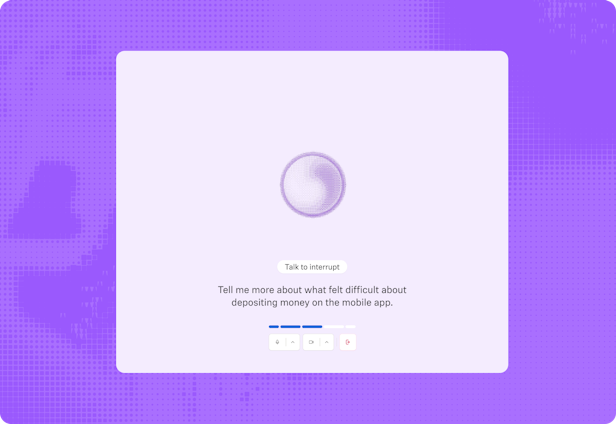
While Listen Labs is built primarily around AI‑led interviews and reporting, Maze offers AI moderation as one capability inside a broader research platform. AI‑moderated interviews in Maze sit alongside usability tests, prototype and live website testing, card sorting, tree testing, and surveys—so insights from conversations directly connect to the rest of your product research.

Control over interview design
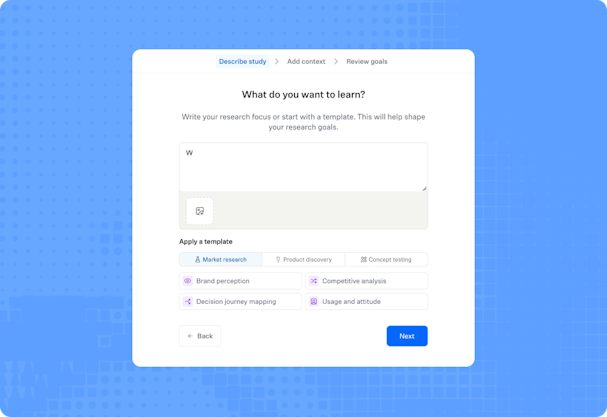
Both Listen Labs and Maze support structured AI-moderated interviews. Maze adds more flexibility with Freeform conversations, where the AI moderator has more autonomy to follow relevant threads. Teams can also add study context, learning goals, probing instructions, and depth controls to shape how each interview runs.

Turning interviews into actionable insights
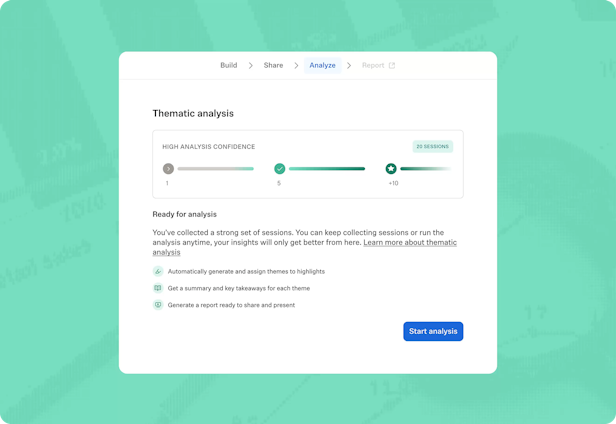
While Listen Labs gives you a Report tab with an AI‑generated summary for each study, those insights stay scoped to the individual project rather than a built-in cross-study view. In Maze, reports are generated for every study type—AI‑moderated interviews, usability tests, live website tests, card sorts, tree tests, and surveys. You can also combine behavioral metrics like usability scores, paths, and completion rates with interview findings.
Maze vs. Listen: AI capabilities comparison
Features

Listen Labs
Maze
—
—
Interviews
—
—
—
—
![]()
"Maze's AI is incredible—it surfaces things we hadn’t considered, which has an immediate impact on how we approach our work."
Cheyenne Ward
UX Lead at LCS





Comprehensive research methods

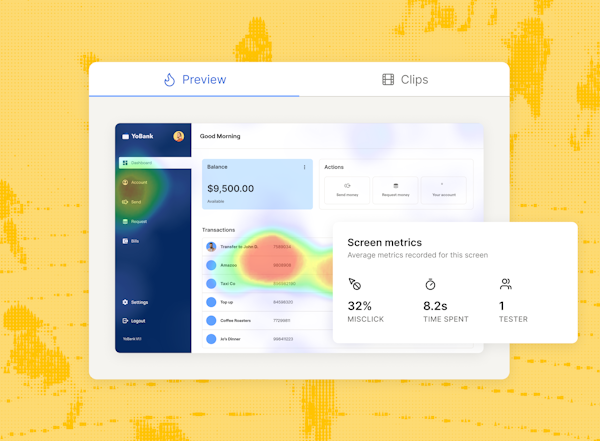
While Listen Labs centers everything around AI‑led interviews, it also lets you run concept tests, creative tests, and task‑based usability testing.
Maze, however, combines AI‑moderated interviews with unmoderated prototype testing, live website testing, card sorting, tree testing, surveys, and mobile testing on a single platform—enabling you to streamline qualitative and quantitative data collection.

Participant recruitment and management
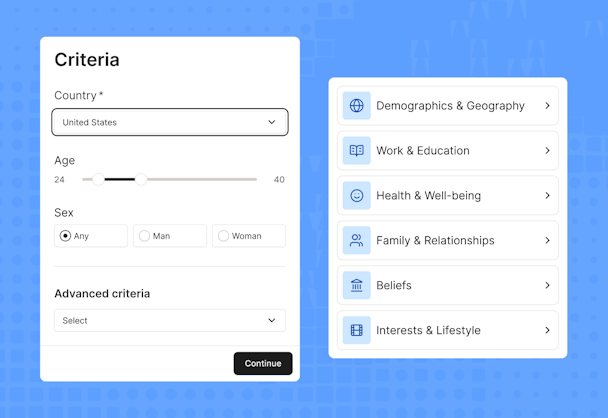
Listen Labs gives you a built‑in panel of 30M+ global participants and combines panel recruits with your own customers in a single study.
Maze supports recruitment via Maze panel—which offers premium Enterprise recruitment for niche B2B and B2C audiences—and by enabling you to recruit your own users. It also includes Panel Ops assistance, which handles sourcing, screening, and quality checks for participants.

Ample integrations
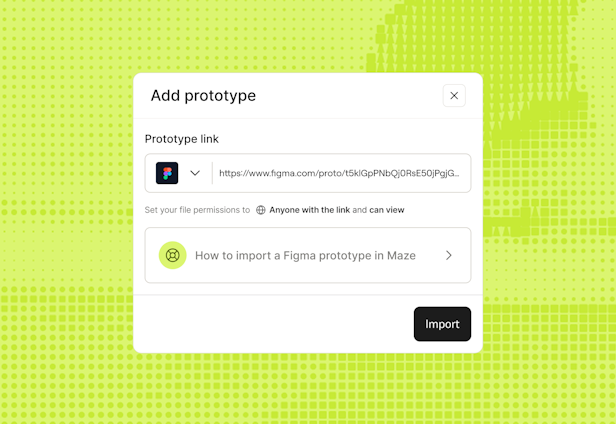
Listen Labs offers a small set of focused integrations with research ops tools like Decipher (Forsta), Rally UXR, and Qualtrics to connect AI‑led interviews with existing survey and panel workflows.
Maze integrates with a much broader product and design stack, including leading AI-prototyping, design, analytics, calendar, and collaboration tools
Maze vs. Listen: Feature comparison
Features
Listen Labs
Maze
—
—
—
Can test prototype URLs, but no direct Figma-level reporting
Axure, Figma
—
Axure, Figma
Atlassian, FigJam, Miro, Notion, Slack
—
Atlassian, FigJam, Miro, Notion, Slack
—
Mobile interviews possible, but no screen recording of user interactions
Google Meet, Microsoft Teams, Zoom
—
Google Meet, Microsoft Teams, Zoom
Google/Outlook Calendar, Exchange, Office 365, iCloud
—
Google/Outlook Calendar, Exchange, Office 365, iCloud
Maze vs. Listen: Takeaways
Choosing between Maze and Listen Labs depends on how far you want your research to extend beyond AI‑moderated interviews.
Listen Labs is built around large‑scale, AI‑moderated customer interviews. It helps teams recruit from a global consumer and professional panel, run in-depth interviews, and turn responses into themes, summaries, video clips, and executive-ready reports.
Maze, on the other hand, is an AI‑first, end‑to‑end user research and testing platform for both moderated and unmoderated studies. Teams can run AI-moderated interviews, traditional interviews, prototype tests, live website tests, live mobile tests, card sorting, tree testing, feedback surveys, and in-product prompts. Maze also gives teams automated reporting across methods. Reports combine study and organization context with quantitative and qualitative insights, including success rates, heatmaps, charts, misclicks, usability scores, path analysis, summaries, and thematic analysis.



Frequently asked questions
Which are the main differences between Maze and Listen Labs?
Which are the main differences between Maze and Listen Labs?
Listen Labs is almost entirely focused on AI‑moderated customer interviews, automated analysis, and reporting. Maze is a broader user research platform that combines AI‑moderated interviews with unmoderated user testing (prototype tests, live website testing, card sorting, tree testing, surveys, in‑product prompts, etc.) in one place.
Which platform is more complete for user research: Maze or Listen?
Which platform is more complete for user research: Maze or Listen?
Maze is more complete for UX and product research because it brings together interviews, usability tests, concept tests, IA studies, and in-product research with analysis and reporting in a single workflow.
How does participant recruitment work in Maze and Listen Labs?
How does participant recruitment work in Maze and Listen Labs?
Listen Labs lets you recruit from a global pool of B2B and B2C participants, integrating with panel providers like Prolific, or you can invite your own customers via links.
Maze offers recruitment through Maze panel, which is powered by trusted third-party providers, including Prolific for unmoderated testing, Respondent for moderated interview studies, and Bilendi exclusively for premium recruitment of niche audiences. Teams can also invite their own participants through study links, recruit users directly with in-product prompts, and use screeners to qualify participants.
Who has a bigger breadth of AI functionalities: Maze or Listen Labs?
Who has a bigger breadth of AI functionalities: Maze or Listen Labs?
Both platforms provide AI‑moderated interviews and automated analysis, but Maze spreads AI across more of the research workflow. Maze offers AI moderator, AI follow‑up questions, Perfect Question (bias‑reduction), AI‑powered themes and sentiment analysis, interview transcripts, and automated reports across interviews and tests. Listen Labs focuses its AI on running interviews, fraud‑checking, summarizing, building personas, clustering themes, and generating evidence‑backed reports from those interviews.
How do Maze and Listen Labs compare in pricing?
How do Maze and Listen Labs compare in pricing?
Maze vs. Listen pricing is an important consideration when choosing the right tool. Maze offers a free plan, with custom pricing for Enterprises. On the other hand, Listen Labs does not publish pricing on its website and is sold through custom, project‑based, or enterprise-style quotes that third‑party sources report typically start around ~$3,000 per engagement, with participant recruitment incentives billed separately.