Comparing research platforms
Maze vs. Lyssna: Which UX research platform is right for you?
Explore the differences between Maze and Lyssna, from user testing and participant tools to AI-powered reporting and continuous discovery for product and design teams.


Maze vs. Lyssna: Introduction
You’re not short of options when it comes to finding a user research platform, but choosing the right one depends on your specific needs. Maze and Lyssna are two popular options—but how do they compare?
Lyssna,formerly UsabilityHub, supports both moderated and unmoderated studies with surveys, five-second tests, prototype testing, live website testing, and user interviews. It also includes participant recruitment, screening, and scheduling. However, it doesn’t yet support native mobile app testing, mobile live website testing, or an AI moderator that can independently conduct interviews
Maze is an AI-enabled end-to-end user research platform that supports both moderated and unmoderated research for uncovering qualitative and quantitative user insights. From prototype and live website testing to card sorting, tree testing, and interview studies, Maze simplifies research with AI-powered solutions and automated reports. Combined with a global participant recruitment (Maze panel), and integrations with design tools like Axure and Figma, Maze helps teams collect insights at the pace of product development.
In this Maze vs. Lyssna comparison, we break down how Maze and Lyssna compare in:
- User-friendliness and ease of use: Which platform is easier to onboard and scale across your team?
- Versatility and functionality: Does it support a comprehensive range of research methods and integrations?
- Product decision-making: How quickly can you analyze results and act on insights?
Maze vs. Lyssna comparison (from G2 reviews)
Maze | Lyssna | |
|---|---|---|
Overall rating | 4.5/5 | 4.5/5 |
Ease of use | 9.0 / 10 | 9.1 / 10 |
Ease of setup | 9.5 / 10 | 9.2 / 10 |
Key integrations |
|
|
Pricing |
|
|
Maze vs. Lyssna: Main differences
What really sets Maze and Lyssna apart for teams doing user research?


AI-driven research automation
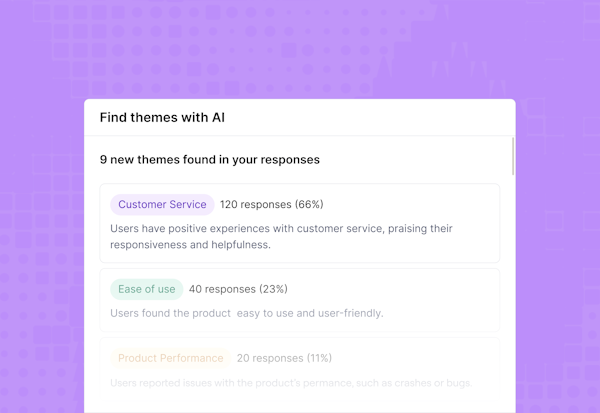
Lyssna offers AI summaries for unmoderated studies and interview recordings, follow-up questions, and a beta model context protocol (MCP) server that lets supported AI assistants query research data. However, Lyssna doesn't currently offer an AI moderator that can independently conduct interviews. Maze also offers an MCP integration, connecting research data to tools such as Claude, ChatGPT, Copilot, and Cursor. It provides a suite of AI-powered research tools that includes these features and more. Ask the right questions at the right time with Maze AI’s perfect question and dynamic follow-ups; scale interview studies with Maze’s AI moderator; and analyze findings with automated themes and AI summaries. It’s AI support across the entire research process to help teams make confident product decisions faster.

Mobile-first research capabilities
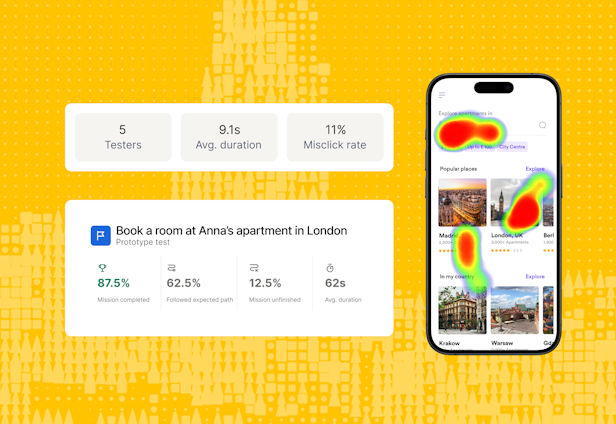
Lyssna enables testing mobile designs and Figma prototypes in a browser, through iPhone, Android, and tablet devices. However, live website testing is currently limited to desktop browsers, and Lyssna doesn’t yet offer native mobile app testing. Maze’s dedicated mobile app, Maze Participate, captures user behavior across live apps, mobile websites, and prototypes. This makes it possible to run realistic mobile studies with full-device screen, audio, and video recordings—alongside desktop testing.

Automated, custom reporting
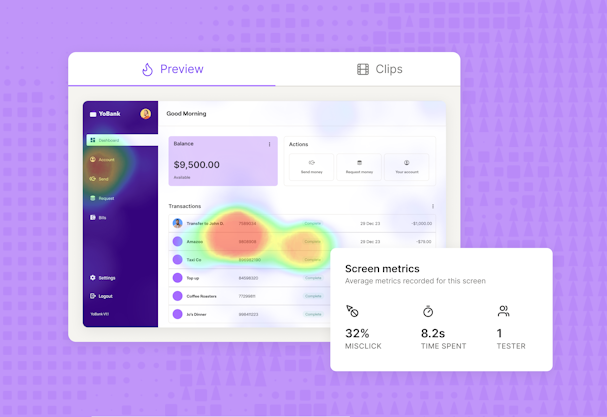
Lyssna provides recordings, AI summaries, tagging, filters, comments, CSV exports, share links, and research-specific visual reports. These include heatmaps, click maps, funnels, Sankey charts, agreement matrices, similarity matrices, bar charts, and word clouds. Maze reports are created automatically following research studies and are fully customizable. For qualitative studies, reports provide AI-powered thematic and sentiment analysis, transcripts, and highlights. For quantitative studies, reports deliver task metrics like completion rates, time on task, and path analysis. Together, these insights give stakeholders the clarity they need to align quickly and move forward with confidence.
Maze vs. Lyssna: Feature comparison
Features

Lyssna
Maze
—
Axure, Figma
Axure, Figma
Bolt, Figma Make, Lovable, Replit
—
Bolt, Figma Make, Lovable, Replit
Atlassian, FigJam, Miro, Notion, Slack
—
Atlassian, FigJam, Miro, Notion, Slack
—
Coming soon
Google Meet, Microsoft Teams, Zoom
Zoom, Teams, Google Meet
Google Meet, Microsoft Teams, Zoom
Google/Outlook Calendar, Exchange, Office 365, iCloud
Google/Outlook Calendar, Exchange, Office 365, iCloud
—
Maze vs. Lyssna: Takeaways
Choosing between Maze and Lyssna depends on your team’s research needs, workflow, and vision.
Lyssna offers a wide range of moderated and unmoderated user testing methods, including surveys, five-second tests, card sorting, tree testing, prototype validation, and live website testing. Its AI capabilities include summaries, follow-up questions, transcription, and an MCP integration. However, Lyssna doesn’t offer an AI moderator for conducting interviews, native mobile testing, or in-product prompts, and its reporting is less automated and customizable compared to Maze.
Maze, on the other hand, is a complete user research platform that combines moderated and unmoderated methods in one place. It supports interview studies, live website testing, prototype testing, card sorting, tree testing, feedback surveys, and in-product prompts—alongside mobile studies with Maze Participate. AI-powered features such as the AI interview moderator, perfect question, AI follow-ups, automated themes, and Maze reports give teams faster, deeper analysis across qualitative and quantitative data. With participant recruitment through Maze panel, integrations with leading design and collaboration tools, and sharing options like clips and custom reports, Maze enables continuous discovery at scale.
Lyssna is a good option for teams that want an accessible platform for user research, but it lacks the innovation and scale that Product organizations now expect. Maze brings AI-powered insights across the research workflow, alongside mobile testing, flexible recruitment, and integrations into one platform, helping teams embed research into every stage of product development.
![]()
"Maze takes the guesswork out of understanding user problems, letting you focus on what matters most."
Henrique Johansson Tramontina
Principal Product Designer at Hopper






Why product and design teams are making the switch to Maze

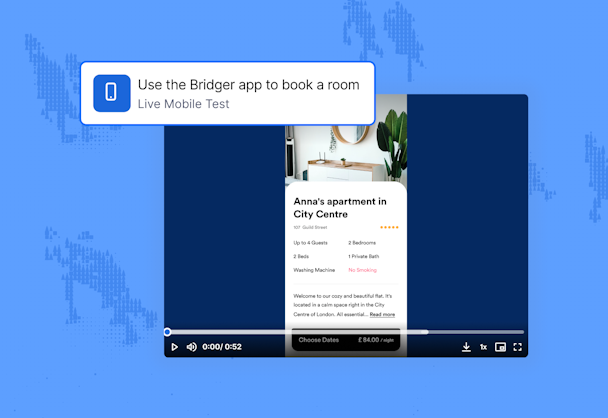
In-product prompts for real-time feedback
Maze enables teams to collect user feedback directly inside live products and websites. With targeted surveys like NPS, CSAT, or PMF, you capture sentiment as users interact, turning every touchpoint into an opportunity for insight.

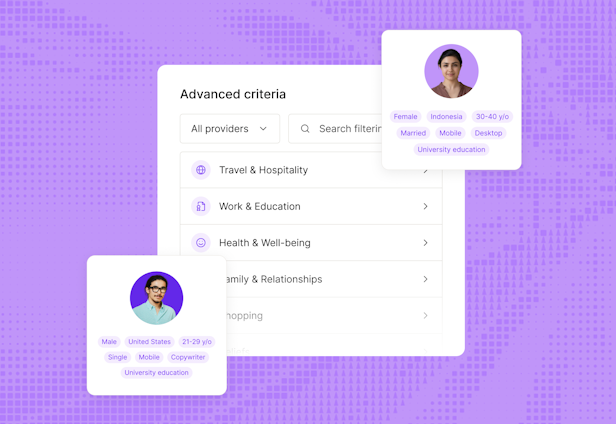
Verified participants, global reach
Maze panel helps teams recruit the right participants for both moderated and unmoderated research across 150+ countries, 400+ filters, and custom screening to match specific research criteria. Maze also reports a 95%+ show-up rate, a 15-minute median time to first participant match, and a 4.89/5 average participant rating.

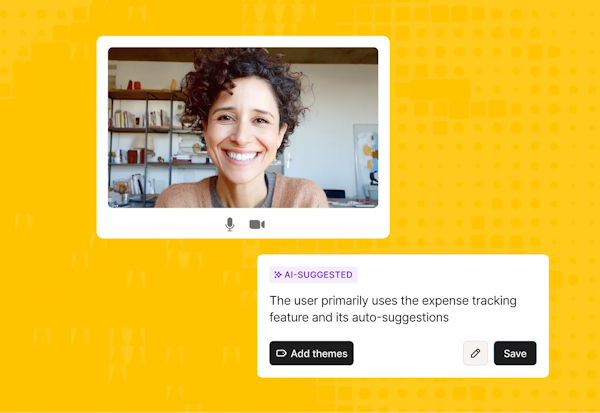
AI-powered research at scale
Maze embeds AI across the research workflow: Maze’s AI moderator runs and analyzes interviews, perfect question reduces bias, AI follow-up digs deeper into responses, and automated themes and sentiment analysis group patterns in minutes. With AI-powered reports, teams move from raw feedback to confident decisions in hours.
Frequently asked questions
Can Maze do moderated testing?
Can Maze do moderated testing?
Yes! Maze supports moderated testing through Interview Studies, allowing teams to schedule, run, and analyze moderated interviews with built-in transcription and AI-powered analysis. Maze users can also deploy Maze’s AI moderator to conduct user interviews. Plus, Maze panel makes recruitment for moderated testing easy.
Which has more advanced AI functionalities: Maze or Lyssna?
Which has more advanced AI functionalities: Maze or Lyssna?
Maze offers more advanced AI functionalities than Lyssna. Both offer AI text summaries, follow-up questions, transcription, and MCP integrations. But Maze also supports bias-free question guidance, AI moderation for interviews, thematic and sentiment analysis, and automated custom reporting.
Which platform is better for remote user research: Maze or Lyssna?
Which platform is better for remote user research: Maze or Lyssna?
Although both Maze and Lyssna support remote testing, Maze offers more remote user research methods—making it the superior option.
How can I start using Maze?
How can I start using Maze?
You can get started with Maze by signing up for a free account—no credit card needed. It’s a quick way to explore the platform and run your first study. If you’re looking for a tailored walkthrough or want to see how Maze fits into your team’s workflow, you can also book a demo with our team.