Research platform comparison
Maze vs. Optimal Workshop: Which is right for research with your users?
Maze is an Optimal Workshop alternative that helps companies build the right products faster by making user insights available at the speed of product development.


Maze vs. Optimal Workshop: Introduction
When it comes to research with your users, choosing the right platform can make all the difference to your team. Optimal Workshop and Maze are two popular research platforms in the market, but which is the better choice for your organization?
Optimal Workshop helps organizations build more intuitive and successful digital experiences through a suite of UX research tools focused on usability testing and navigation/content testing.
Maze is an AI-first end-to-end platform that brings qualitative and quantitative insights together to enable decision-making at the pace of product development. Alongside extensive research methods, Maze also supports teams with participant recruitment, AI-powered research optimization, and UX reporting that democratizes research across your organization.
In this detailed comparison, we’re covering how both these platforms compare to each other in key points such as:
- User-friendliness: How easy will this platform be to onboard with my team or organization? Will this help democratize our user research?
- Versatility: Is this a true end-to-end platform? Does it facilitate both quantitative and qualitative research methods? How well does this platform integrate with the design tools we use?
- Product decision making: How easily and quickly can we analyze results and customize insight reports to make important decisions?
Platform comparison (from G2 user reviews)
Maze | Optimal Workshop | |
|---|---|---|
Overall rating (G2) | 4.5/5 out of 90+ reviews | 4.4/5 out of 10+ reviews |
Ease of setup | 9.4 / 10 | 8.7 / 10 |
Product direction | 8.4 / 10 | 8.3 / 10 |
Pricing |
|
|
Maze vs. Optimal Workshop: Main differences
What really sets Maze and Optimal Workshop apart for teams doing research?


One tool vs many

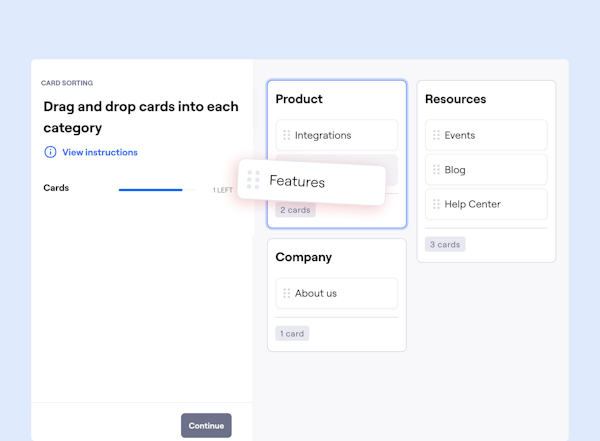
Optimal Workshop runs each research method as a separate study type. This requires teams to set up and manage multiple standalone studies.

Maze offers a single, unified workflow making multi-method research easier to plan, run, and share

Breadth of research methods

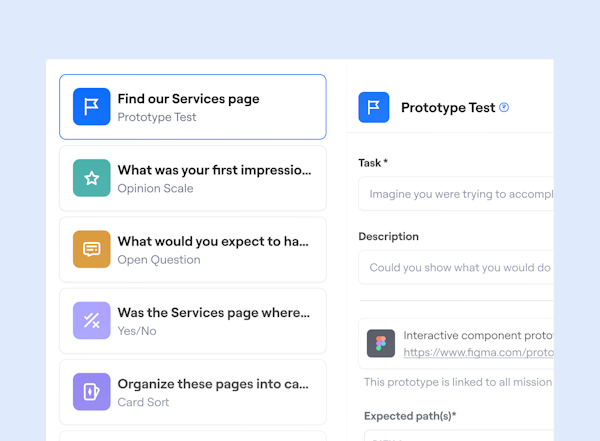
Both Maze and Optimal Workshop offer core research methods like card sorting, tree testing, and surveys.

But Maze goes beyond with in-product surveys, live mobile testing, AI-moderated interviews, and AI prototype testing

AI-powered automation

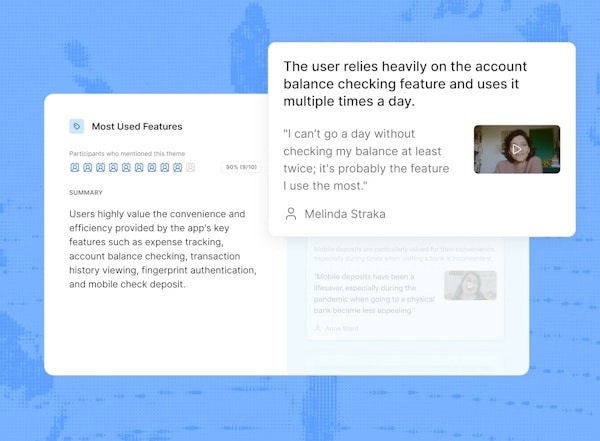
Maze automates question validation, generates dynamic follow-up prompts, identifies themes in open-ended responses, and delivers transcripts with sentiment analysis.

Maze’s AI moderator runs autonomous interviews that adapt to responses across time zones and languages.
Maze vs. Optimal Workshop: Feature comparison
Features
Optimal Workshop
Maze
6M+ Vetted B2B and B2C Panelists
6M+ Vetted B2B and B2C Panelists
Bolt, Figma Make, Lovable, Replit
Bolt, Figma Make, Lovable, Replit
Axure, Figma
—
Axure, Figma
Atlassian, FigJam, Miro, Notion, Slack
—
Atlassian, FigJam, Miro, Notion, Slack
—
—
—
Google Meet, Microsoft Teams, Zoom
—
Google Meet, Microsoft Teams, Zoom
Google/Outlook Calendar, Exchange, Office 365, iCloud
—
Google/Outlook Calendar, Exchange, Office 365, iCloud
Maze vs. Optimal Workshop: AI capabilities
Features
Optimal Workshop
Maze
—
—
—
—
—
Maze vs. Optimal Workshop: Takeaways
At the end of the day, it comes down to which platform aligns better not only with your budget, but also with your workflow and vision as a team.
Optimal Workshop is a user insights platform that supports card sorting, tree testing, first-click testing, prototype testing, live site testing, surveys, and qualitative interviews. However, it does not support video recordings, branching logic in surveys, in-product surveys, or integrations with design and AI-prototyping tools—which can limit end-to-end usability workflows.
Maze is an intuitive, cost-effective platform built for teams that need fast, reliable user insights. It supports a range of research methods, including prototype testing, live website testing, mobile studies, in-product surveys, moderated and AI-powered interviews, tree testing, and card sorting. Maze also simplifies the entire workflow, with participant recruitment tools, AI for analysis and moderation, automated reports, and integrations with tools like Figma, Bolt, Loveable, Zoom, and Slack, so teams can run and share research at speed.


![]()
Using Maze has supercharged our product design process and made it possible to drive faster turnaround times, speeding up product iteration and making for a better, faster user experience.
Yuna Akazawa
Product Designer at Braze
![]()
By switching to Maze, we've consolidated four tools, including UserTesting, into one. Our workflow has been simplified, and we're saving on budget. We've even been able to extend more licenses across the team at the same cost.
Heidi Brown
Director of Product Design and User Research at Classy
![]()
Using Maze has supercharged our product design process and made it possible to drive faster turnaround times, speeding up product iteration and making for a better, faster user experience.
Yuna Akazawa
Product Designer at Braze
![]()
By switching to Maze, we've consolidated four tools, including UserTesting, into one. Our workflow has been simplified, and we're saving on budget. We've even been able to extend more licenses across the team at the same cost.
Heidi Brown
Director of Product Design and User Research at Classy







Why product and design teams are making the switch to Maze


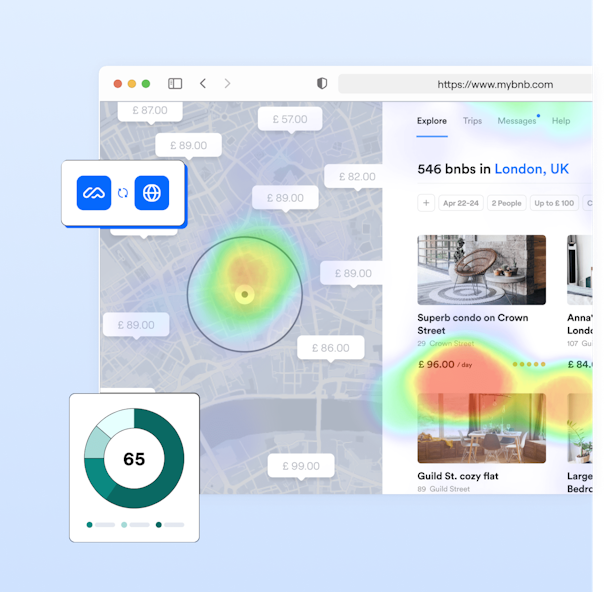
Live website testing
Extensive integrations
Maze connects seamlessly with the tools your team already uses, including Figma, Notion, Slack, Zoom, Miro, and Amplitude. From importing prototypes to scheduling interviews and embedding reports, integrations help you simplify research across every stage of your workflow.


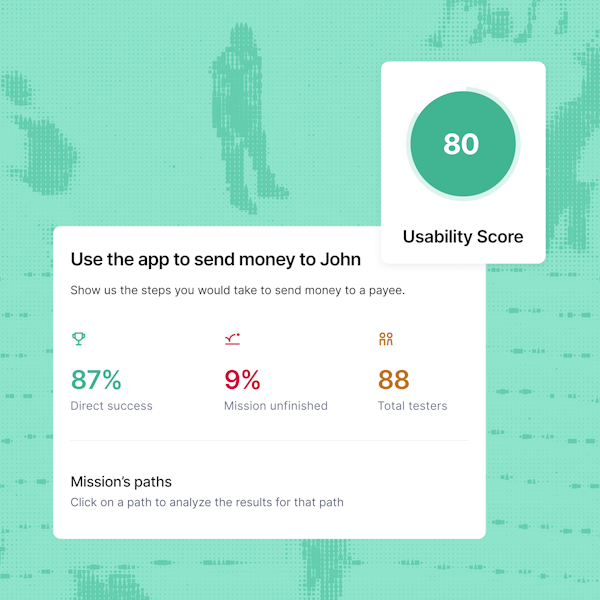
Robust, customizable reporting
Maze's reports are automated, visually-rich, and fully customizable. Filter and categorize information in detail to uncover patterns and share valuable insights with stakeholders.

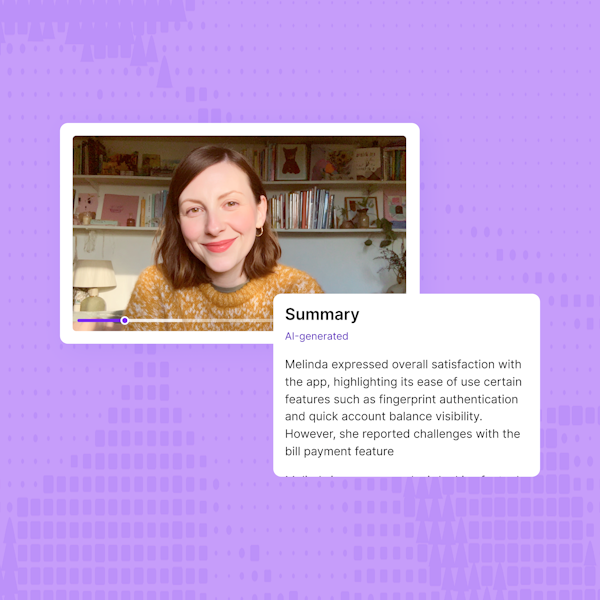
Maze AI
Embrace the future of AI-powered user research
Elevate your company's product research with an innovative, AI moderator that helps you run and analyze interviews at scale. Pair that with AI-generated prototypes from Figma Make, Bolt, Replit, and Loveable, and you can validate ideas in hours.
Frequently asked questions
Why choose Maze over Optimal Workshop for user research?
Why choose Maze over Optimal Workshop for user research?
Product managers, designers, and researchers choose Maze because it's more intuitive and user-friendly, making it easy to adopt across teams. Even complex tasks like testing prototypes are faster to set up and run.
Maze also offers a broader range of integrations, connecting seamlessly with tools like Figma, Slack, Zoom, Notion, and Amplitude to streamline every step of the research workflow. Finally, Maze provides more robust automated reports that are visually rich, and fully customizable, so teams can uncover patterns and share insights with ease.
How can I start using Maze?
How can I start using Maze?
You can get started with Maze by signing up for a free account—no credit card needed. It’s a quick way to explore the platform and run your first study. If you’re looking for a tailored walkthrough or want to see how Maze fits into your team’s workflow, you can also book a demo with our team.
Who is Maze for?
Who is Maze for?
Maze is built for product teams, UX researchers, designers, and anyone involved in making user-informed decisions. Whether you're part of a startup running lean tests or an enterprise scaling research across departments, Maze gives you the tools to collect insights quickly, collaborate easily, and deliver better experiences.
What kind of teams use Maze?
What kind of teams use Maze?
Maze is used by product, design, research, and marketing teams at companies of all sizes—from early-stage startups to global enterprises. It’s especially valuable for teams practicing continuous discovery, looking to scale research, or aiming to democratize insights across functions. Whether you're validating prototypes, testing live flows, or running interviews, Maze supports cross-functional teams working to build better products.
Does Maze use AI?
Does Maze use AI?
Maze has a breadth of AI-powered functionalities designed to elevate your product research and enabling you to collect more insights, faster, and with more precision than ever before.
Can I request a demo?
Can I request a demo?
Absolutely! Tell us a little about your company here and we’ll connect you with someone in our team.
How do Maze and Optimal Workshop compare in AI functionalities?
How do Maze and Optimal Workshop compare in AI functionalities?
Both platforms offer AI support, but Maze covers more of the research workflow. Optimal Workshop provides AI-assisted transcription, tagging, and insight generation in its interview tool. Maze extends AI across planning, testing, and analysis, with automated reports, question support, and AI-moderated interviews that run follow-up–driven interviews without manual scheduling. Maze also supports AI-generated prototype testing with tools like Figma Make, Loveable, Bolt, and Replit, helping teams validate early ideas in hours.



Bring a customer-focused mindset to your organization
Maze gives product teams a scalable way to uncover user insights at speed and feed them across the entire product development cycle.