Comparing research platforms
Maze vs. Outset: Which AI research platform is right for your team?
Compare Maze vs. Outset on AI capabilities, research methods, recruitment, reporting, and pricing to choose the right platform for your team.


TL;DR
Maze and Outset both use AI to speed up user research, but they serve different needs. Outset is mainly built for AI-moderated interviews, recruitment, and fast analysis. Maze gives teams a broader research platform, with AI-moderated interviews, moderated interviews, prototype testing, live website and mobile testing, surveys, card sorting, tree testing, participant recruitment, and automated reporting.
Maze vs. Outset: Introduction
AI is reshaping user research, from planning studies and recruiting participants to collecting data, running interviews, analyzing findings, and sharing insights with stakeholders. Maze and Outset both use AI to accelerate research, but they serve different research needs.
Outset is an AI‑moderated research tool built primarily around qualitative interviews. It combines an AI interviewer with mixed‑method studies so you can ask open and closed questions, use dynamic follow‑ups, and capture behavior and sentiments in one workflow.
Maze is an AI‑first, end‑to‑end user research platform that goes beyond just interviews. Alongside AI‑moderated interview studies, Maze supports traditional interviews, prototype testing, live website testing, card sorting, tree testing, surveys, and mobile studies. Participant recruitment is made easy with Maze panel and in-product prompts, which enable you to invite users from within your product. Throughout the research workflow, Maze AI powers dynamic follow-ups and automated themes to improve question quality, runs interviews at scale, and quickly groups and summarizes insights.
In this Maze vs. Outset comparison, we look at how the tools compare when it comes to:
- AI‑moderated interviews and analysis: How does each platform design, run, and summarize AI‑led conversations?
- Breadth of research methods and workflows: Do the tools focus on interviews alone or support broader user experience research and product development?
- Pricing and scalability: How do plans scale with usage, and which types of teams is each research and testing tool best suited for?
Maze vs. Outset: Comparison (from G2 reviews)
Maze | Outset | |
|---|---|---|
Overall rating (G2) | 4.5 / 5 | N/A |
Ease of setup | 9.4 / 10 | N/A |
Ease of use | 9.0 / 10 | N/A |
Integrations |
|
|
Pricing |
| Custom plans |
Maze vs. Outset: AI moderation for user interviews
What really sets Maze and Outset apart for teams doing research?


More control over how interviews run
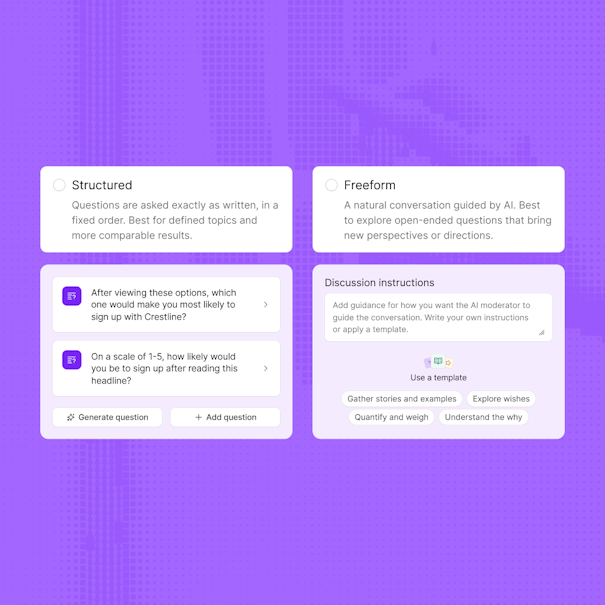
Outset’s AI interviewer can ask follow-up questions and adapt to participant responses. But it doesn’t offer the same mix of structured and freeform interview styles in one study. Maze lets teams choose how the interview should run. You can use structured goals when every participant needs the same questions. Or use freeform goals when you want the moderator to follow new threads. And combine both when you need consistency and room to explore research questions.

Guardrails for better interview quality
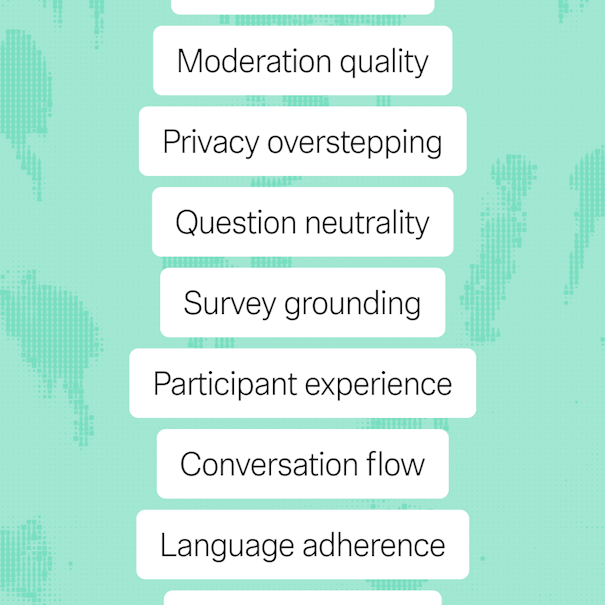
Outset includes AI quality detection to flag low-effort responses and prompt participants to provide more detail. These checks focus mainly on the quality of participant answers. Maze’s AI moderator is built with research guardrails from the start. It’s tied to your study goals, avoids leading questions, and is evaluated across 25 quality metrics. So teams can run more interviews without lowering the quality.


Connecting AI interview insights with other data
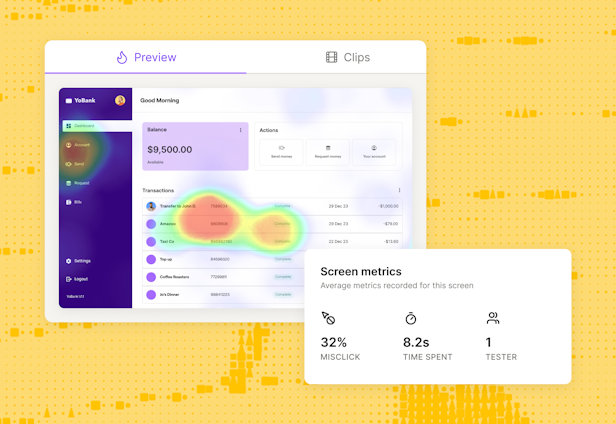
Outset is primarily built for AI interviews. While these insights are great, you’ll likely want to run other research without needing a different platform. Maze connects AI-moderated interviews with the methods product teams already use, including prototype tests, live website tests, visual stimulus tests, and surveys. Teams can compare what users say with what they do, then turn both into reports stakeholders can act on.
Maze vs. Outset: AI moderator capabilities comparison
Features

Outset
Maze
—
—
—
—
—
—
—
—
![]()
"Maze's AI is incredible—it surfaces things we hadn’t considered, which has an immediate impact on how we approach our work."
Cheyenne Ward
UX Lead at LCS



Maze vs. Outset: Main features
What really sets Maze and Outset apart for teams doing user research?

Comprehensive research methods

Outset supports AI-moderated interviews, usability tests, concept testing, visual testing, and AI-driven synthesis. It’s useful for research teams that want to run conversational research at scale.
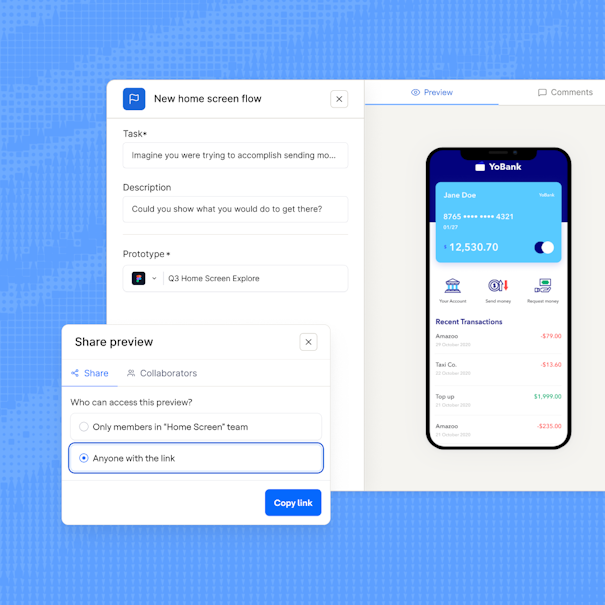
Maze supports a wider set of UX research methods, including AI-moderated interviews, researcher-led interviews, prototype testing, live website testing, mobile testing, surveys, card sorting, and tree testing. This gives teams more ways to validate ideas, test flows, and compare what users say with what they do.

Participant recruitment and management
Outset offers participant recruitment via Prolific and User Interviews. You can also invite your own users and use custom screeners and fraud detection.
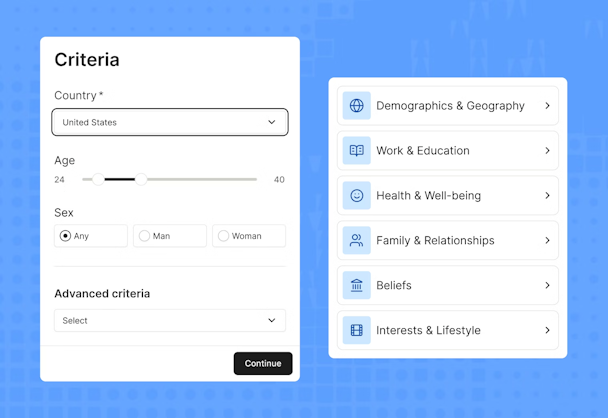
Maze panel gives teams access to millions of pre-screened participants across 130+ countries, with 400+ filters to help find the exact participants you’re looking for. For niche audiences, Maze offers premium Enterprise recruitment and Panel Ops support to help with sourcing, screening, and quality checks.

Ample integrations
Outset integrates with recruitment and research tools like Prolific, User Interviews, and Rally. It also connects with AI and productivity tools like Claude, ChatGPT, Figma, and Notion.
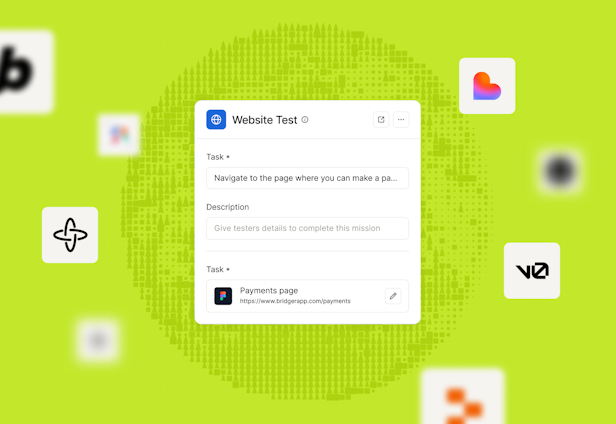
Maze connects with more tools across design, AI prototyping, analytics, scheduling, collaboration, and interviews. Some of these include Figma, Figma Make, Amplitude, Google Calendar, Zoom, Microsoft Teams, Miro, Slack, and Notion.
Maze vs. Outset: Feature comparison
Features
Outset
Maze
—
—
—
Axure, Figma
Figma
Axure, Figma
Atlassian, FigJam, Miro, Notion, Slack
ChatGPT, Claude, Cursor, Glean, Microsoft Copilot, Notion
Atlassian, FigJam, Miro, Notion, Slack
—
via interviews
via interviews
—
Google Meet, Microsoft Teams, Zoom
—
Google Meet, Microsoft Teams, Zoom
Google/Outlook Calendar, Exchange, Office 365, iCloud
—
Google/Outlook Calendar, Exchange, Office 365, iCloud
Maze vs. Outset: Pricing
Outset offers custom pricing based on your team’s research needs, study setup, and support requirements. Plans include core AI-moderated research features, such as AI-moderated interviewing, custom reports, highlight reels, transcript-wide analysis, and shareable recruitment links
Some Outset capabilities are listed as plan add-ons, including custom interviewer branding, white-labeling, bespoke recruitment management, custom survey integrations, and guided analysis review with Outset researchers.
Maze, on the other hand, offers options to fit different researchers and teams. There’s a Free plan for individuals who want to start with usability testing. It includes one study per month, five seats, essential prototype testing, surveys, and pay-per-use panel credits.
For larger teams, Maze offers customized enterprise plans. These include custom study volumes, unlimited seats, access to a global panel of millions of participants, and the option to bring your own participants for free. Enterprise teams also get moderated and AI-moderated interviews, prototype testing, surveys, card sorting, tree testing, mobile experience testing, all Maze AI features, presentation-ready reports, and research partner access.
Maze vs. Outset: Takeaways
Choosing between Maze and Outset depends on whether your team needs a dedicated AI-moderated research tool alone or a broader platform for continuous product research.
Outset is built around AI-moderated interviews and recruitment. Teams can use it to recruit participants, run conversational research, test concepts and experiences, and generate reports. It also supports highlight reels, themes, transcripts, and summaries. This makes Outset a strong fit for teams focused mainly on AI-led qualitative research.
Maze is an AI-first, end-to-end user research and testing platform. Teams can run AI-moderated interviews, traditional interviews, prototype tests, live website tests, live mobile tests, card sorting, tree testing, and feedback surveys. Teams can also recruit participants through the Maze panel or use in-product prompts to invite relevant users directly from live websites.
Maze also gives teams automated reporting across methods. Reports can combine interview findings with behavioral data, including success rates, heatmaps, paths, usability scores, misclicks, summaries, and thematic analysis. Maze connects with tools like Figma, Amplitude, Google Calendar, Zoom, Miro, Slack, and Notion to help teams keep research connected to the workflows they already use.



Frequently asked questions
Which are the main differences between Maze and Outset?
Which are the main differences between Maze and Outset?
Outset focuses on AI-moderated interviews, recruitment, and fast synthesis. Maze is a broader user research platform. Like Outset, it supports AI-moderated interviews, but also offers solutions for moderated interviews, prototype testing, live website testing, mobile testing, surveys, card sorting, tree testing, and in-product prompts.
Which platform is more complete for user research: Maze or Outset?
Which platform is more complete for user research: Maze or Outset?
Maze is more complete for end-to-end user research. Teams can plan studies, recruit participants, run moderated and unmoderated research, test prototypes and live experiences, analyze results, and share reports from one platform. Maze also supports more UX research methods, including card sorting, tree testing, surveys, mobile testing, and in-product prompts.
Can Outset test prototypes?
Can Outset test prototypes?
Yes, Outset can support prototype testing through AI-moderated usability sessions. However, it doesn’t offer the same direct Figma prototype testing workflow, task metrics, heatmaps, path analysis, or misclick data that Maze provides.
How does participant recruitment work in Maze and Outset?
How does participant recruitment work in Maze and Outset?
Outset supports recruitment through 25+ native panel integrations, including Prolific and User Interviews. Teams can also share a link with their own panel or customer list.
Maze offers Maze panel for recruiting from a global participant pool, plus premium Enterprise recruitment for niche B2B and B2C audiences.
Who has a bigger breadth of AI functionalities: Maze or Outset?
Who has a bigger breadth of AI functionalities: Maze or Outset?
Maze has the broader set of AI capabilities across the research workflow. Outset focuses mainly on AI-moderated interviews and synthesis. Maze supports AI moderation, dynamic follow-ups, question guidance, AI-powered analysis, themes, summaries, sentiment analysis, and automated reports across multiple research methods.
Why choose Maze over Outset for user research?
Why choose Maze over Outset for user research?
Choose Maze if you want an AI-first, end-to-end user testing platform. Teams can recruit participants through Maze panel, in-product prompts, or via their own network. You can also run AI-moderated interviews, prototype tests, live website and mobile tests, surveys, card sorting, and tree testing.
Maze also lets teams analyze interview findings alongside behavioral data such as task success, heatmaps, paths, and misclicks. Maze then automatically generates presentation-ready reports, helping teams share findings and move from research to product decisions faster.