Comparing research platforms
Maze vs Dovetail: Choosing the Right Platform for Product Research
From prototype testing to AI insights, see how Maze and Dovetail compare in helping teams collect, analyze, and share research at speed.


Maze vs. Dovetail: Introduction
Choosing the right user research platform is key to turning feedback into actionable insights. Maze and Dovetail are two well-known platforms, but they serve different purposes within the research process.
Dovetail is a research repository and data analysis tool, not a platform for running research. You can’t conduct usability tests, prototype tests, interviews, card sorts, or any live studies inside Dovetail. All data must be imported from external usability testing tools for Dovetail to tag, organize, and analyze using AI.
Maze is an end-to-end user research platform that enables both moderated and unmoderated studies, including Interview Studies, Feedback Studies, Prototype Testing, and more. With Maze’s AI capabilities, teams can automate interviews, generate follow-up questions, summarize findings, and uncover key themes faster. Mobile testing through Maze Participate, AI-driven prototyping integrations with Figma Make, Bolt, and Loveable, and participant management make it a complete, scalable solution for modern research workflows.
In this detailed comparison, we explore how Maze and Dovetail compare in:
- User-friendliness and ease of use: Which platform is easier to onboard and scale across your team?
- Versatility and functionality: Does it support live testing, AI-powered analysis, and integrations across your design and data tools?
- Product decision-making: How quickly can you collect, analyze, and share insights to move projects forward?
Let’s see which platform meets your needs.
Maze vs. Dovetail comparison (from G2 user reviews)
Maze | Dovetail | |
|---|---|---|
Overall rating (G2) | 4.5 / 5 | 4.5 /5 |
Ease of setup | 9.0 / 10 | 8.7 / 10 |
Ease of use | 9.4 / 10 | 8.6 / 10 |
Integrations |
|
|
Pricing |
|
|
Maze vs. Dovetail: Main differences
What really sets Maze and Dovetail apart for teams doing research?


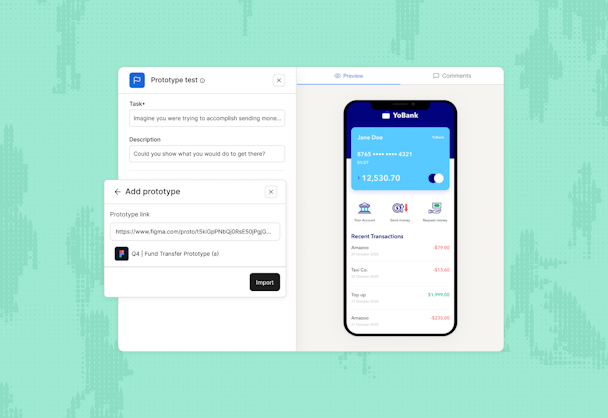
End-to-end research execution
Dovetail pulls insights from customer feedback, interviews, and support conversations to create a searchable, AI-powered repository. However, it doesn’t natively support usability testing or live studies. It’s for analysis, not research. Maze enables teams to conduct both qualitative and quantitative research, including moderated and unmoderated approaches such as prototype testing, live website testing, card sorting, and tree testing.

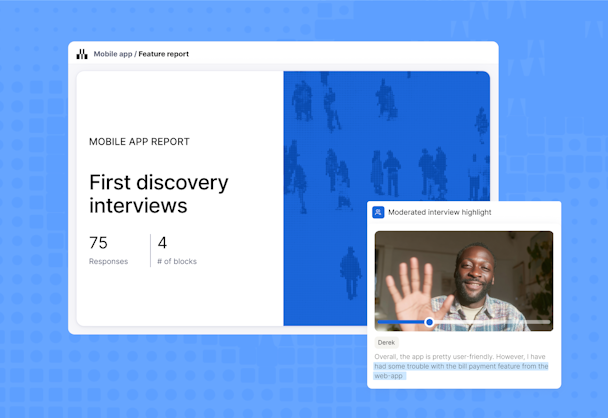
Automated, shareable reporting
Dovetail provides strong tagging and synthesis of customer insights, but creating shareable reports still requires manual setup. Teams must export insights into other tools. Maze Reports are generated following any study with metrics like completion rate, time on task, and path analysis with AI-powered sentiment and theme summaries. Reports are fully customizable and shareable.

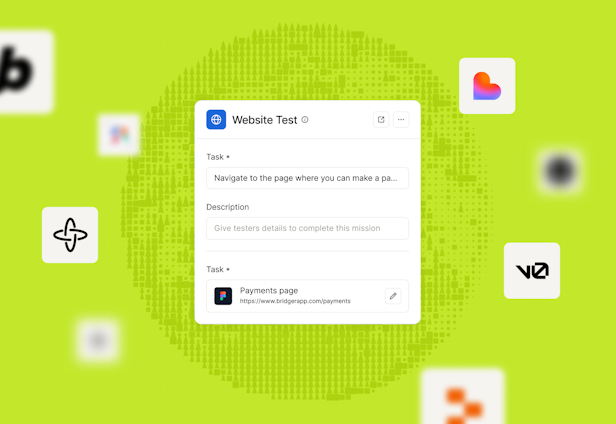
Integrations across design and data tools
Dovetail connects widely across CRM, support, and productivity stacks like Salesforce, Intercom, HubSpot, and Zapier, which suits insight storage and cross-team documentation. Maze integrates with product and design tools like Figma, Figma Make, FigJam, Bolt, Loveable, Miro, Amplitude, and Atlassian products. Maze also connects with collaboration tools like Slack, Zoom, Google Meet, Microsoft Teams, and Notion. Together, these integrations plug Maze directly into the design, testing, and analysis workflow.
Maze vs. Dovetail: Feature comparison
Features

Dovetail
Maze
—
—
—
—
—
—
Bolt, Figma Make, Lovable, Replit
—
Bolt, Figma Make, Lovable, Replit
Amplitude, Atlassian, Miro, Notion, Slack
Amplitude, Atlassian, Miro, Notion, Slack
—
—
—
—
—
Google Meet, Microsoft Teams, Zoom
No native video hosting, but can import recordings from Zoom, Google Meet, and Microsoft Teams
Google Meet, Microsoft Teams, Zoom
—
Maze vs. Dovetail: Takeaways
Choosing between Maze and Dovetail depends on your team’s research goals, workflows, and how you approach insights.
Dovetail is built primarily as an insight repository and research analysis hub. It centralizes feedback from interviews, surveys, and customer touchpoints, allowing teams to tag, cluster, and search insights efficiently. Its strength lies in data organization and AI-assisted synthesis, not in executing live research.
Maze, on the other hand, provides an end-to-end research and user testing platform that combines qualitative and quantitative methods in one place. Teams can run Interview Studies, Surveys, Prototype Tests, Live Website Testing, Card Sorting, and Tree Testing directly within Maze, supported by AI tools like Maze’s AI moderator, Perfect Question, Dynamic Follow-Ups, Automated Themes, and Interview Analysis.
Together, these automate question design, conduct interviews at scale, and summarize insights with accuracy and speed.
![]()
"Maze takes the guesswork out of understanding user problems, letting you focus on what matters most."
Cheyenne Ward
UX Lead at LCS



Why Product and Design teams prefer Maze


An intuitive, comprehensive research platform
Maze unifies testing, interviewing, reporting, and insight sharing in one intuitive platform. Teams can run moderated and unmoderated studies, validate prototypes, and analyze results seamlessly. With mobile testing through Maze Participate, teams can capture real user behavior across live apps and websites.

AI research capabilities and focus
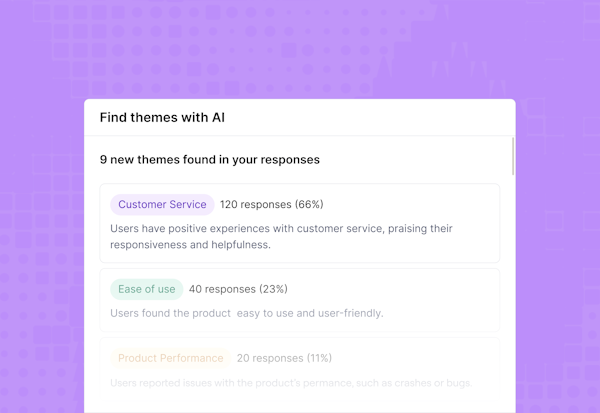
Maze AI accelerates discovery with intelligent automation. Maze’s AI moderator conducts interviews at scale, while Perfect Question, Dynamic Follow-Ups, and Automated Themes refine questions, analyze responses, and summarize insights. Integrations with Figma Make, Bolt, and Loveable enable real-time AI prototype testing.

Seamless participant management
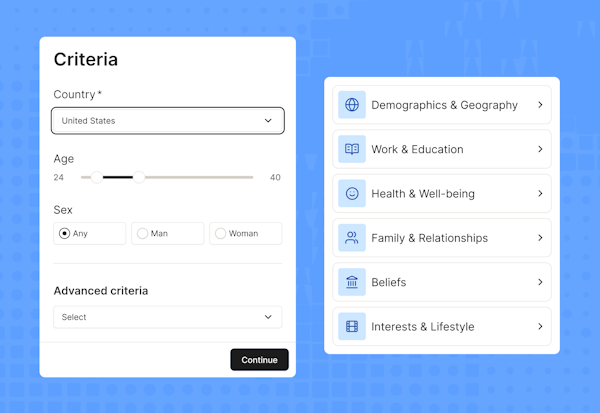
With Maze Panel, access 3M+ global participants using 400+ filters for precise targeting. Maze Reach lets teams build custom databases, send targeted campaigns, and track engagement, making participant recruitment and recontact fast, flexible, and effortless.



Frequently asked questions
Can Maze do moderated testing?
Can Maze do moderated testing?
Yes! Maze supports moderated testing through Interview Studies and live prototype walkthroughs. Teams can host real-time sessions via integrations with Zoom, Google Meet, or Microsoft Teams, and scale automatically using Maze’s AI moderator, which plans, runs, and analyzes interviews 24/7.
Moderated sessions can include live prototype or concept validation tests, enabling researchers to observe participants, ask contextual follow-ups, and capture behavioral insights in real time—all within Maze.
Which has more advanced AI functionalities: Maze or Dovetail?
Which has more advanced AI functionalities: Maze or Dovetail?
While Dovetail’s AI focuses on analyzing and tagging imported data, Maze AI enhances the entire research workflow from planning studies to running them and interpreting results. Maze includes features like AI Moderator for automated interviews, Perfect Questions for bias-free question design, dynamic follow-ups for contextual probing, and automated themes for instant summaries. It also supports AI prototype testing through integrations with Figma Make, Bolt, and Loveable.
Which platform is better for remote user research: Maze or Dovetail?
Which platform is better for remote user research: Maze or Dovetail?
Maze is better than Dovetail for conducting remote user research. Maze is designed for remote, end-to-end user research. Teams can run moderated, unmoderated, and AI-moderated studies, including Prototype Testing, Live Website Testing, and Mobile Testing. With Maze Panel, researchers can recruit participants from over 150 countries, and Maze Reach enables recontacting or segmenting your own user base for follow-up studies. Combined with integrations for Zoom, Teams, and Google Meet, Maze makes running and analyzing global remote research seamless, fast, and scalable.
How can I start using Maze?
How can I start using Maze?
You can start using Maze for free, no credit card required. Sign up to run your first study in minutes or book a demo to see how Maze fits your workflow. The Free plan includes core research methods, while Enterprise plans unlock advanced features like Maze AI, AI moderator, and Maze Panel for participant recruitment. Get started with Maze.