










When people ask how AI has changed my job, they usually expect me to talk about speed.
And they’re not wrong. Research is faster than it used to be. Literature reviews that once took weeks now take days. I can explore large qualitative datasets in hours rather than months. I spend less time gathering information, searching for evidence, or getting to a first version of an answer.
But speed isn’t the biggest change I've noticed. What’s surprised me is how much more social my job has become. Instead of doing research in isolation, I’m building on other researchers' work, facilitating workshops, creating things we can think around, and helping teams make sense of evidence together.
For most of my career, research was constrained by bandwidth. There was never enough time to gather evidence, synthesise interviews, revisit old studies, and build a point of view before the next question arrived. A lot of that work happened alone. My job was to produce insight and communicate it as clearly as I could.
AI hasn't changed why I do the work. It’s changed where I spend my time.
Research has a memory now
One of the most valuable things AI has given me is better memory.
Research teams already have a huge amount of knowledge. The challenge is being able to find and use it. Good research gets buried in old reports, forgotten documents, and past projects. Then the same questions come around again, and starting from scratch can feel easier than working out what the organisation already knows.
AI has made that much easier.
I can quickly reconnect years of research, compare what we're hearing now with what we've heard before, and see how our understanding of a topic has changed. Each new project has more of a foundation to build from.
Finding that information is one thing. Understanding why it matters still depends on context. I've built up a huge amount of context simply from being around the business: what we've heard from customers before, what other researchers have learned, what we've tried, what the business believes, and the conversations happening around it all. Some of that exists in documents. A lot of it doesn't. I might hear something today and connect it to a conversation from six months ago, or realise it challenges something we've believed for years.
You can put an enormous amount of information into AI, but it's difficult to give it all of that accumulated context. Sometimes, it's just what you know from having been there.
The output is just the beginning
The other big change for me has been what happens after the research.
I used to think the output was the finish line. The goal was to produce the clearest possible synthesis, present it to the business, and hand it over. I don't really think about it that way anymore. Getting to the output feels more like the start of the interesting part.
I spend less time using people's time to present research back to them, and more time in workshops and conversations where we're working through what it means together. Assumptions get challenged. Someone brings context I didn't have. A finding connects to something happening elsewhere in the business. Someone disagrees with my interpretation and we have to work out why.
I've found myself asking “How do I help people think with this?” much more than “How do I present this?” AI helps me get to that point faster. With less time spent manually assembling evidence, I can pull another researcher into the work, follow a thread from someone else's project, or sit down with a team and work through what we're seeing.
We're also learning how to use AI together. Nobody has completely figured this out. We share workflows, prompts, scripts, things that worked, and plenty of things that didn't. If a researcher or data scientist finds a better way to explore something, it gets picked up by the rest of us pretty quickly.
We're learning what AI means for our craft together.
Making research easier to work with
That shift has changed the things I make, too. I still write reports, but I find myself reaching for frameworks, diagrams, and conceptual models much more than I used to.
I've realised that I rarely know if I truly understand something until I've tried to draw it. Making a framework forces me to decide how things relate to each other. And once it's there, people have something to react to. They can disagree with it. Pull it apart. Point out what's missing. Add another perspective.
Sometimes I need to make something unfinished enough that people want to work on it with me. A framework gives us something concrete to gather around, exposes assumptions, and makes disagreements easier to see.
That's where the value is: in the thinking it makes possible.
Where the craft matters most
The more I use AI, the more conscious I am of the parts of research I want to hold onto.
I still want to listen to customers myself. AI can summarise an interview, but I want to hear the hesitation before an answer, notice the language someone naturally reaches for, or catch the frustration that doesn't quite make it into a transcript. I don't want a synthesis to become the main way I experience what people are telling me.
I feel the same way about sense-making. I love sitting with research and figuring out the story: what connects, what doesn't, and what feels important. AI can help me get there, but I don't want to skip over my own thinking along the way.
That makes judgement and opinion even more important to me. At some point, I have to be able to say, “I think this is what's going on.” Or, just as importantly, “I don't think that's what we're seeing here.” I don't want to outsource my point of view to AI. And I still have to decide whether I believe what I'm seeing. Is this genuinely a pattern, or has AI flattened several different things into one? Is this interesting, or simply the most obvious finding in the data? Those decisions draw on experience, context, and instinct.
I haven't completely figured out where the line is yet. I'm still experimenting with where AI helps and where it creates too much distance between me and the research. It can help me move faster and find connections, but the craft is still mine to hold onto: the judgement, curiosity, context, conversations, and instinct to know when something doesn't quite fit.
If anything, AI has made me more conscious of those parts of being a researcher—not less. The tools may be changing the way I work. But the craft is still deeply human. And increasingly, deeply social.
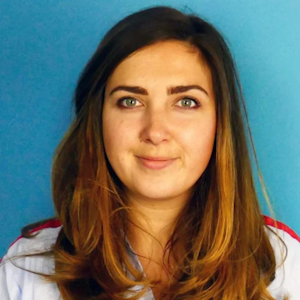
Thank you to Jen Murphy for sharing her perspective on how AI is changing the day-to-day craft of research. As the role of AI continues to evolve, these practitioner perspectives are an important part of the conversation about where technology can help—and where human judgment, context, and connection continue to matter.