





The System of Learning Playbook
Turn research into an advantage that compounds
Learning that grows with every decision
Teams make better decisions when they can build on what they've already learned.
But when research lives in individual projects, that knowledge gets stuck. Each study has its own brief, stakeholders, readout, and final destination. Once the project ends, the context often gets left behind. When a similar question comes up later, another team has to start piecing the picture together again.
A system of learning connects those moments. Researchers sit at the center, setting the standards, workflows, and guardrails that help teams build a shared body of knowledge over time. Each new piece of research adds to what the organization already knows, giving teams more context to work with when the next decision comes around.
In practice, it’s made of five connected stages:
Baseline
What do we believe to be true today?
Make the assumptions behind an important decision visible. Capture what the team believes about its customers, product, market, or strategy, alongside the evidence supporting those beliefs.
A shared baseline gives new evidence something to reinforce, challenge, or refine.
Monitor
What is changing around us?
Watch the signals that could affect those assumptions. These may come from customer behavior, product data, research, feedback, team observations, competitors, or changes in the market.
The value comes from seeing patterns across the sources that matter—not tracking everything that moves.
Surface
What deserves our attention?
Bring signals together and identify where the organization’s understanding may be drifting.
This stage helps teams separate meaningful change from background noise, uncover unanswered questions, and recognize which assumptions deserve a closer look.
Research
What do we need to understand better?
Investigate the uncertainty that matters to a live decision.
Research may begin with an assumption that feels less reliable, a pattern the team can’t explain, or a high-impact choice that needs stronger evidence. Because the question comes from the wider loop, the findings have a clear place to go.
Decide
What will we do differently?
Use the learning to make, revisit, or adjust a decision. Capture what informed the choice, what remains uncertain, and what the team needs to watch next.
That decision becomes part of the new baseline, giving the next cycle a stronger starting point.
This playbook explores why organizations need a system of learning, what it means for research teams, and how to start building one, drawing on practical frameworks, Maze’s Future of User Research Report 2026, and perspectives from industry leaders.
Meet the industry experts
Aneta Kmiecik
Founder, Be Your Own Design Team



Matthieu Dixte
Senior Product Researcher, Maze



Nikki Anderson
Founder, User Research Strategist


Noel Gee
Head of Research Partner Program, Maze

Chapter 1: The learning gap
The research is done, but the learning doesn’t stop there
“We’re moving pretty fast on this one; do we really need to run a study?"
Research enters the conversation after a direction has already gathered momentum. The findings might change how the team sees the problem, but the original plan keeps moving. Everyone agrees that research should have been involved earlier. Then the next urgent decision comes along.
Chapter one looks at why this pattern persists, even as research becomes easier for more people across the organization to access. You’ll explore what happens when research is treated as a series of separate projects, and why the work doesn't end when the findings are delivered. The chapter also looks at what gets lost between studies and how researchers can help teams carry learning from one decision into the next.
66% of participants say research demand has climbed in the last year, creating more pressure.

66% of organizations said demand for research increased year over year. That growing demand creates an opportunity for researchers to connect the work happening across the organization, so each study adds to what teams already know and helps them make better decisions over time.
The organizations that consistently adapt are the ones connecting what they believe, what they learn, and the decisions they make into a continuous loop. That’s what we call a system of learning.



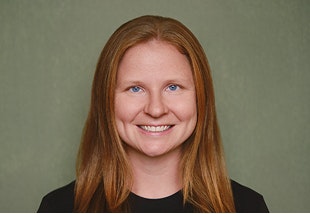
Aneta Kmiecik
Founder, Be Your Own Design TeaM
Inside this chapter:
The illusion of project-based research
How to move from input to impact
Ready-to-use exercises
Chapter 2: The learning maturity model
Understand how your organization learns today
Two organizations might run the same number of studies and still have very different ways of learning. The difference lies in what happens after the research is done. Does it shape the decision in front of the team? Do people connect it to what they already know? Can new evidence still change the plan?
Chapter two introduces the five-stage system and helps you assess how learning happens across your organization today. You’ll explore the behaviors that define each level, see where practices differ between teams, and identify the next step that makes sense for your organization. You don't need to fit the whole business into one category; it’s about knowing where you are and where to focus next.
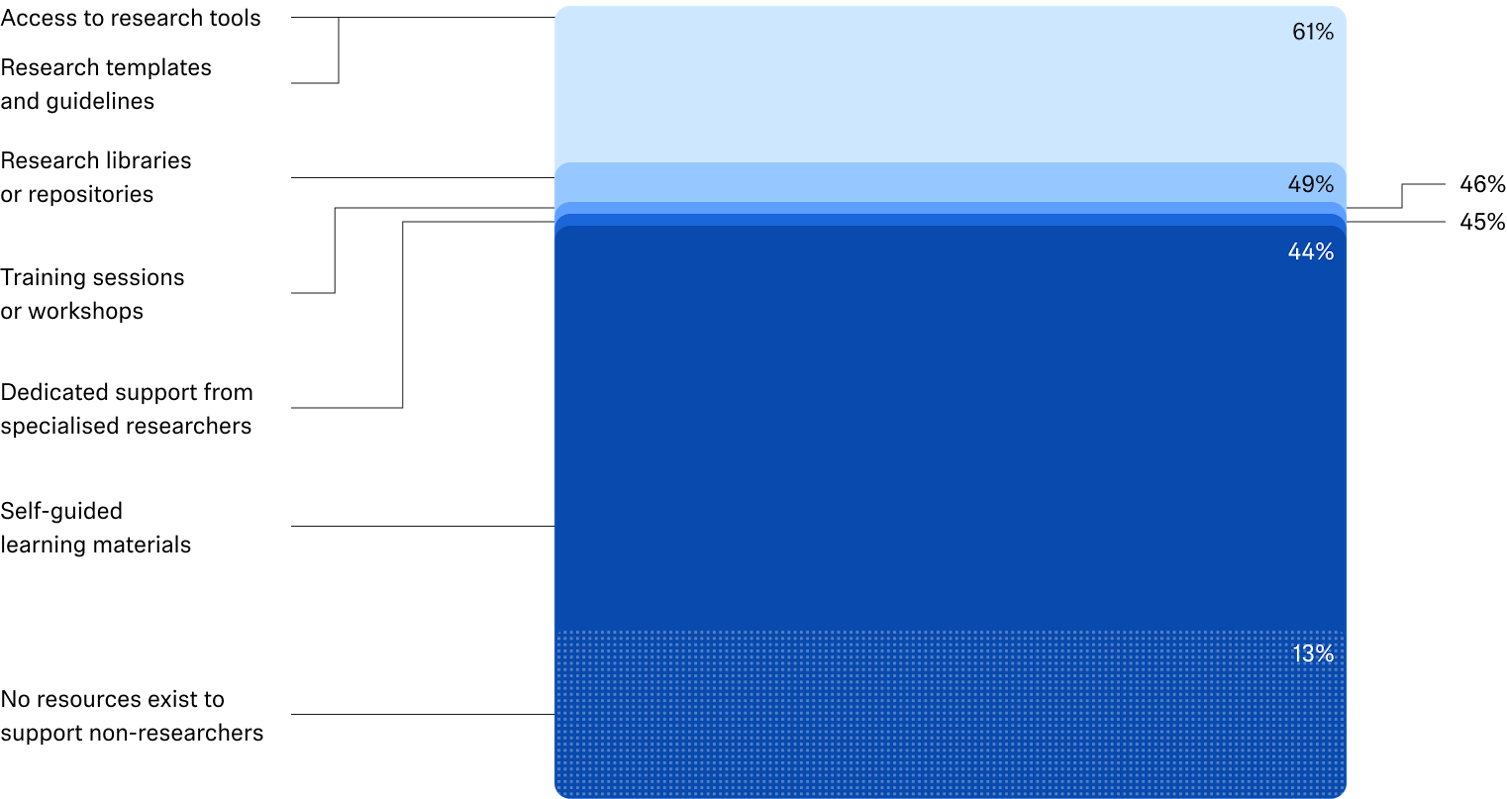
61% of organizations provide research tools and templates, but fewer than half offer research libraries, training, or dedicated support for people conducting research outside the research team. Access to research is a valuable start. Teams also need shared standards, accessible context, and ways to connect what they learn to the decisions they make.
What resources are available to support non-researchers in conducting research?


Level 1: Reactive
Teams repeatedly ask questions they’ve explored before. Decisions often rely on instinct, recent anecdotes, or dashboards that show what happened without helping teams understand why.
Level 2: Systematic
Teams have processes, but work happens in isolation—a sign of mistaking consistent activity for a connected learning system. Strong processes only matter when they influence priorities, plans, and decisions.
Level 3: Proactive
Teams build on what they’ve learned and develop shared habits for using evidence. They can't predict what will happen, but they can spot signals early and recognize when reality no longer matches the plan.
You may place your organization on more than one level. A research team might work systematically while another function remains reactive. The maturity model helps you see those differences clearly and decide where a stronger learning loop could make the biggest difference.
Inside this chapter:
How the five stages work together in practice
The three levels of learning maturity
Templates for deciding where to focus next
Chapter 3: The learning advantage
Build research expertise into the way you work
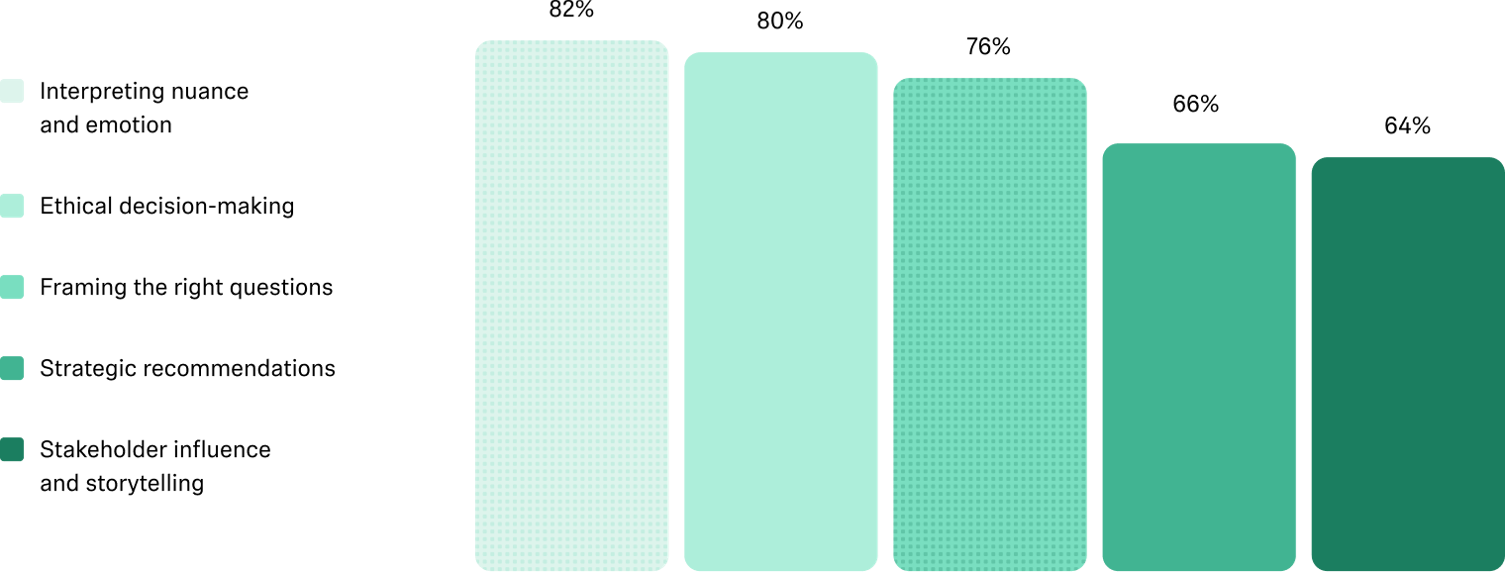
AI is taking on more of the work involved in running research. Human judgment still matters where it counts most: understanding nuance and emotion, framing the right questions, and deciding what the evidence means.
82% of researchers point to interpreting nuance and emotion as an area where human expertise remains essential, while 76% highlight framing the right research questions. As more of the execution becomes automated, researchers have an opportunity to focus on the judgment that helps teams make sense of evidence and decide on the right direction.
When using AI in research, where is human judgment still essential?


A system of learning puts that expertise to work across the organization, but it doesn’t undercut the value that researchers bring to the table.
Researchers help create the methods, standards, workflows, and guardrails that make it easier for teams to gather useful evidence, understand what it means, and bring it into the decisions that matter.
The final chapter helps you put this into practice. You’ll use ready-to-use frameworks and templates to build a learning loop around one live decision, then see how the same approach can grow over time. Whether you're starting small or scaling an established research practice, you'll leave with practical guidance for making learning part of how your organization works.
A system of learning looks like a PM running a concept test with the right templates, success criteria, and analysis in place. It looks like a designer running usability sessions with an established protocol. It means teams can generate insights because the right infrastructure is there to support them.

Noel Gee
Head of Research Partner Program, Maze
Inside this chapter:
How research guide organizational learning
The four steps to build a learning loop
Frameworks and templates to help you get started
A system of learning isn’t a research process or a feedback program—it’s a rhythm. It’s the way an organization stays continuously aligned with reality, by making sure learning doesn’t just get captured, but actually shapes what happens next.



Jonathan Widawski
Co-founder & ceo, Maze
About the system of learning
What is a system of learning?
What is a system of learning?
A system of learning is a continuous operating rhythm that connects what an organization believes, the signals it observes, the research it conducts, and the decisions it makes. It helps teams bring insight into the next decision rather than treating every research project as a fresh start.
Is a system of learning a research repository?
Is a system of learning a research repository?
No. A repository supports the system, but it isn’t the system itself. A system of learning connects stored knowledge to live assumptions, changing signals, and upcoming decisions.
Does a system of learning mean running more research?
Does a system of learning mean running more research?
Not necessarily. It helps teams understand what they already know, identify the uncertainty that matters, and direct research toward decisions where stronger evidence could change the outcome.
What role do researchers play?
What role do researchers play?
Researchers design the learning architecture. They create the methods, standards, workflows, and guardrails that make high-quality learning possible across teams. Their judgment remains central to choosing the right questions, identifying gaps, interpreting evidence, and challenging weak assumptions.
Can a small research team build a system of learning?
Can a small research team build a system of learning?
Yes. Begin with one decision, one workflow, and one complete loop. The playbook is designed to work with the practices and evidence you already have.
How does AI fit into a system of learning?
How does AI fit into a system of learning?
AI can accelerate parts of execution, such as study creation, analysis, and synthesis. Human judgment remains responsible for setting the learning agenda, interpreting meaning, and deciding what the organization should do next. AI surfaces, humans decide.
Methodology
This playbook combines practical guidance with insights from The Future of User Research 2026 survey, created using Maze and distributed between December 23, 2025 and January 13, 2026. Maze collected nearly 500 responses across roles including UX/Product Researchers (44%), UX/UI/Product Designers (26%), and Marketers (9%). Participants spanned organizations of all sizes, with representation from both Europe (34%) and North America (31%).
Maze donated $2 for every completed survey to the Raspberry Pi Foundation—$1,000 in total—in support of their mission to empower young people through computing and digital technology.
About Maze
Maze empowers researchers to be change makers, turning customer insights into enduring competitive advantage. By bringing recruiting, testing, and analysis together, Maze helps organizations move from intuition to evidence, faster. From researchers to designers and PMs, anyone can run studies that answer any question and drive better decisions. Equipped with Maze’s research-grade AI, teams can focus on what matters most: understanding people, uncovering insights, and shaping change with confidence.
Start building your system of learning
Research has more impact when its value doesn’t end with the readout. Build a shared system that helps your organization move learning forward so every decision has a stronger starting point.