













A growing number of research teams are looking beyond individual projects and finding ways to connect customer understanding over time. They’re building a shared, real-time knowledge of what they know across their organization, so each decision begins with more context than the last.
At Maze, we call this a system of learning.

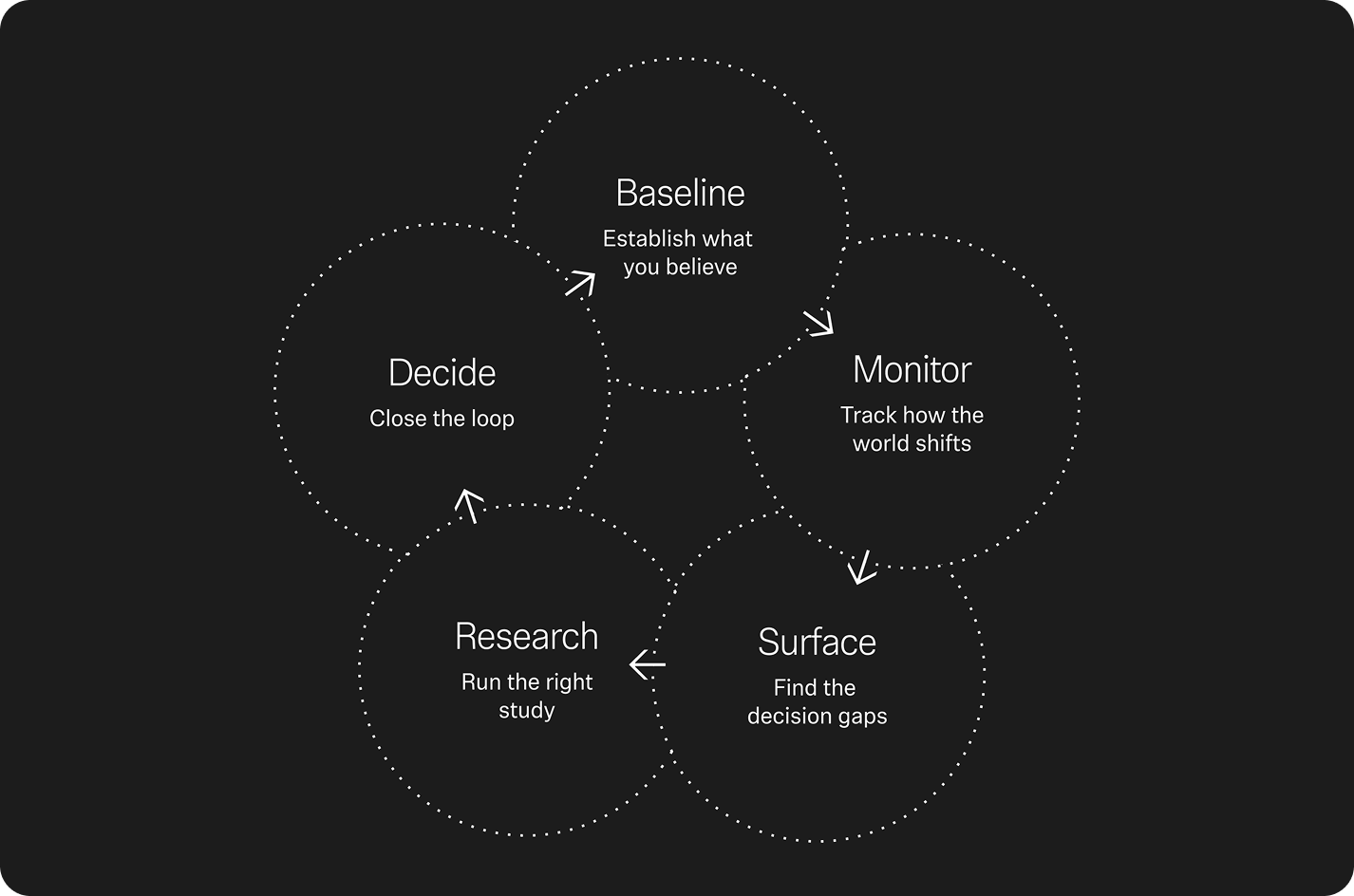
Built across five connected stages—baseline, monitor, surface, research, and decide—a system of learning helps teams connect insights over time, and turn isolated studies into knowledge their organization can build on.
The System of Learning Playbook explores what it takes to build this kind of learning system, with findings from Maze's Future of User Research Report 2026 and perspectives from research leaders:
Here’s an overview of what you’ll find inside the playbook.
We start by looking at why project-based research makes it harder for organizations to learn over time. From there, the playbook introduces a learning maturity model and what’s needed in each step to strengthen learning. The final section brings these ideas into practice, with practical steps to help you start building a system of learning with the evidence and workflows you already have.
The illusion of project-based research
“We’re moving pretty fast on this one; do we really need to run a study?" It's one of the most familiar messages researchers receive when an important decision is on the line. The follow-up is just as common: "These findings are really interesting. We’re going to move forward with our original plan, but let’s loop you in earlier next time.”
Those conversations reflect how research happens in a lot of organizations today. Teams are expected to move quickly (especially with AI helping produce evidence faster) and demand for research continues to grow. In Maze’s Future of User Research Report 2026, 66% of organizations said demand increased year over year.
More research creates more opportunities to learn, but it doesn’t always create shared organizational knowledge. When teams approach research differently, findings can become disconnected from the decisions they were intended to support, making it harder to build on what the organization already knows.
💡 A question worth asking: Can your team explain what's changed about your customers—or only what the last study found?
Moving beyond project-based research starts with understanding how your organization currently learns. The strongest research teams are finding ways to connect the assumptions behind decisions, the evidence they gather, and the choices they make over time.
The three levels of learning maturity

No two organizations learn in the same way. Some research teams have established processes and strong foundations, while others are focused on making research more visible and accessible across the business.
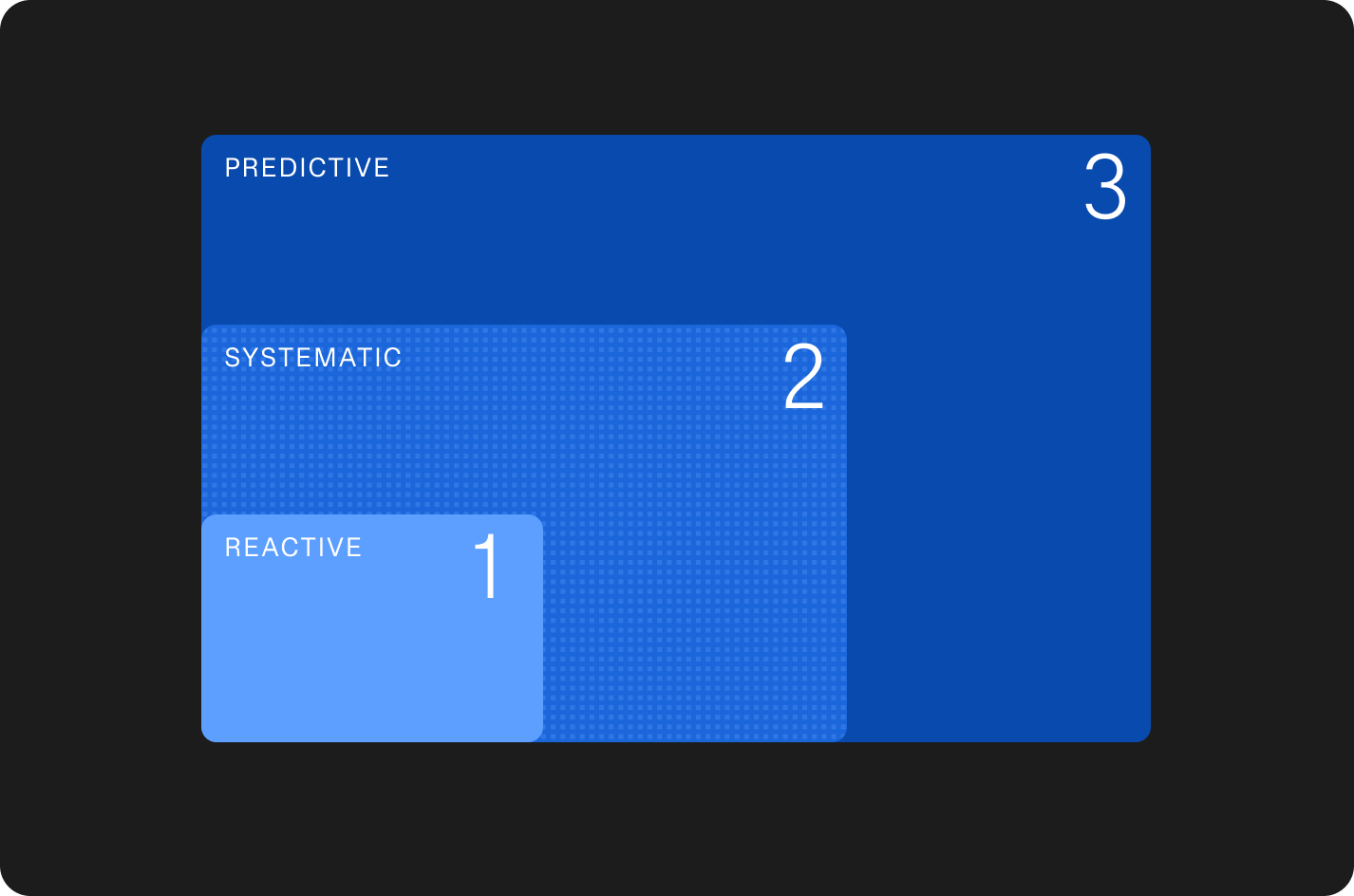
It’s also common for different teams within the same organization to operate differently. A research team might have consistent practices, while product or marketing teams are still approaching research one project at a time. The System of Learning Playbook introduces a learning maturity model to help teams assess where they are today and identify the next step toward stronger learning practices.
The model introduces three levels:
- Level 1: Reactive
- Level 2: Systematic
- Level 3: Predictive
As you read through the model, you’ll probably recognize parts of your organization across more than one level, and that’s completely normal. The purpose of the model is to help teams understand their current state and identify where they can strengthen the way learning happens.
📖 Curious where your organization sits? Assess your learning maturity →
Build research expertise into the way your team learns
As more teams take on research, the role of the researcher continues to evolve.
AI is helping teams move faster and support more parts of the research process, but the expertise researchers bring to interpreting evidence, understanding people, and framing the right questions remains essential. 82% of researchers said interpreting nuance and emotion remains an essential human skill, while 76% highlighted the importance of framing the right research questions.
This creates an opportunity for researchers to expand their influence across the organization. Instead of being involved only when a research project begins, researchers help teams build stronger research habits, create consistent ways of working, and make it easier to apply that learning in the future.
The playbook explores what this looks like in practice, including four practical steps for building a system of learning and templates to help teams map assumptions, track signals, capture decisions, and create stronger learning loops.
💡 A shift worth considering: As more teams contribute to research, where does your expertise create the most impact? Is it in running studies and answering individual questions, or in helping your organization build stronger ways to learn and make decisions?
If you’re looking for a practical place to start, that’s exactly what the playbook is designed to help you do—with templates and frameworks ready for you to use.

Frequently asked questions about a system of learning
What is a system of learning?
What is a system of learning?
Is a system of learning a research repository?
Is a system of learning a research repository?
Does a system of learning mean running more research?
Does a system of learning mean running more research?
What role do researchers play?
What role do researchers play?
Can a small research team build a system of learning?
Can a small research team build a system of learning?
How does AI fit into a system of learning?
How does AI fit into a system of learning?